
Exercise Daily – The Real Truth About Weight Watchers Activity Points (2025 Updated Guide)
Exercise Daily _ Weight Watchers activity points are perfect for you if you step on the scale, avoid dessert, stay away from high-fat meals – and still see almost no progress.
Meanwhile, someone else eats pasta, walks for 45 minutes, and somehow loses weight every single week. So what is going on?
The real question is simple:
Is it the food… or is it the activity?
This is exactly where the Weight Watchers activity points system becomes a potential game-changer – if you actually understand the math behind it. Many people click “calculate,” see a number, and then either overeat or under-eat based on a number they don’t really understand.
Exercise Daily has brought a more detailed, debatable, and practical breakdown of the Weight Watchers activity points calculator for you, so you can stop guessing and start using activity points like a smart tool – not a magic trick.
Why Activity Points Matter More Than Just “Cutting Carbs”
Let’s start with the controversial part.
Many people believe that simply refraining from eating sugary or fatty meals will suffice to lose weight. That’s the classic “no sugar, no carbs, no fun” strategy. If that actually worked long-term, we wouldn’t still be fighting an obesity epidemic in 2025.
However, many are unaware that the human body needs sugar and carbohydrates in order to function properly. Your brain runs mainly on glucose, and your muscles use glycogen (stored carbs) as a primary fuel source during many types of exercise.
So carbs are not the enemy. Inactivity is.
The Weight Watchers activity points system allows you to consume sugar and carbs in moderation while compensating by increasing the intensity and duration of your exercises. Instead of saying “never eat this food again,” it basically says, “Okay, enjoy that food – now let’s see how much movement you need to balance it out.”
How Weight Watchers Activity Points Actually Work (Simple Breakdown)
Think of activity points like earning pocket money for movement:
- If you move a little, you earn a little “money.”
- If you move more intensely, you earn more “money.”
- If you move longer and harder, you earn even more.
Then you can “spend” that activity point money on extra food or keep the points to maintain a bigger calorie deficit. The points are calculated based on three main elements:
- Your weight
- Your workout duration (minutes)
- Your workout intensity (low, moderate, or high)
Behind the scenes, these factors are linked to concepts like energy expenditure, metabolic equivalents (METs), and calorie burn. The calculator simply packages that complex math into simple activity points.
How to Use the Exercise Daily Weight Watchers Activity Points Calculator
Golden Ratio Bodybuilding: Most Effective Method For Building Muscle And losing Weight
Here is a very simple, Classic Editor–friendly guide you can follow step by step. Imagine explaining this to a 10-year-old – that’s the level of clarity we want.

- Enter your weight in the calculator. You can choose kilograms (kg) or pounds (lb). If you choose pounds, the calculator converts it to kilograms automatically.
- Enter your workout duration in minutes. No need to convert to hours.
- Select your exercise level – low, moderate, or high intensity.
- Choose “Added Points” or “Original Points.” These are two different formulas Weight Watchers has used over the years. We give you both options.
- Click the calculate button and your activity points will appear.
That’s it. But if you want to really use this smartly, you must understand the factors behind the scenes.
Conversion Note: Pounds to Kilograms
- 1 pound (lb) = 0.453592 kilograms (kg)
- Or in reverse: 1 kg = 2.20462 lb
The calculator uses these conversions to keep the math accurate, no matter which unit you select.
Photo
Title
Price
Buy

Zero Point Weight Loss Cookbook for Beginners: Easy Point-Based Recipes and a 60-Day Meal Plan for Fast Results
$14.90


Weight Watchers Air Fryer Recipes: 78 Fast & Healthy Ideas
$12.99
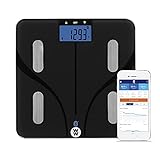
Weight Watchers Scales by Conair Smart Scale for Body Weight, Digital Bluetooth Smart Bathroom Scale with Body Fat, Muscle, and BMI in Black
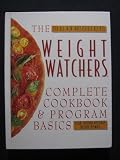
The Weight Watchers Complete Cookbook and Program Basics
$17.45

Weight Watchers 50th Anniversary Cookbook: 280 Delicious Recipes for Every Meal
$14.99
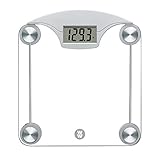
Weight Watchers Scales by Conair Bathroom Scale for Body Weight, Digital Scale, Glass Body Scale Measures Weight Up to 400 Lbs. in Clear Glass
As an Amazon Associate, Exercise Daily earns from qualifying purchases. This post may contain affiliate links. Last updated: September 24, 2026
| Photo | Title | Price | Buy |
|---|---|---|---|
|
|
Zero Point Weight Loss Cookbook for Beginners: Easy Point-Based Recipes and a 60-Day Meal Plan for Fast Results | $14.90 |
|
|
|
Weight Watchers Air Fryer Recipes: 78 Fast & Healthy Ideas | $12.99 |
|
|
|
Weight Watchers Scales by Conair Smart Scale for Body Weight, Digital Bluetooth Smart Bathroom Scale with Body Fat, Muscle, and BMI in Black |
|
|
|
|
The Weight Watchers Complete Cookbook and Program Basics | $17.45 |
|
|
|
Weight Watchers 50th Anniversary Cookbook: 280 Delicious Recipes for Every Meal | $14.99 |
|
|
|
Weight Watchers Scales by Conair Bathroom Scale for Body Weight, Digital Scale, Glass Body Scale Measures Weight Up to 400 Lbs. in Clear Glass |
|
As an Amazon Associate, Exercise Daily earns from qualifying purchases. This post may contain affiliate links. Last updated: September 24, 2026
Factors for Added Points (Updated Style)
The “Added Points” formula reflects a more modern approach where intensity plays a stronger role in how your workout is rewarded. These multipliers are applied to your weight and workout duration.
Added Points Multipliers
- Low intensity = 0.00033
- Moderate intensity = 0.00047
- High intensity = 0.00117
Higher intensity = higher multiplier = more activity points.
Factors for Original Points
The “Original Points” formula is based on an earlier Weight Watchers system, where the focus was more on total calorie burn over time. It is more conservative in some cases.
Original Points Multipliers
- Low intensity = 0.0002332
- Moderate intensity = 0.000327
- High intensity = 0.0008077
- Conversion reminder: 1 pound = 2.20462 kg
Even with different factors, both systems follow the same basic idea: heavier body + longer workout + higher intensity = more points.
Example Calculation: How Many Activity Points Do You Really Earn?
Let’s walk through a detailed example so you can see how the numbers come together. This is where the activity points move from “mystery number” to “meaningful data.”
Example:
- Weight: 170 lb
- Duration: 45 minutes
- Intensity: Moderate
- Point System: Added Points
Step 1 – Convert Pounds to Kilograms
170 lb × 0.453592 = 77.11 kg (rounded)
Step 2 – Apply the Formula
Formula: Points = weight (kg) × duration (minutes) × intensity factor
For moderate intensity (Added Points): factor = 0.00047
So:
Points = 77.11 × 45 × 0.00047 ≈ 1.63 activity points
What Does 1.6 Activity Points Look Like in Food?
Depending on your Weight Watchers plan, this could roughly equate to:
- 1 medium apple + 1 small light yogurt, or
- 1 protein bar, or
- Half a serving of rice with vegetables, or
- 2 cups air-popped popcorn plus a piece of fruit.
This is why activity points matter: they give you flexibility without completely destroying your calorie deficit.
What Qualifies for Activity Points?
Another question you could have is: what exactly counts as an “activity” for the purpose of earning points?
Some activities are very obvious, such as:
- A brisk walk around your neighborhood
- 30 minutes on the elliptical machine
- Riding a bike
- Jogging around the track
However, this is where a lot of people leave points on the table. Many forget to count organized movement that doesn’t feel like traditional cardio.
Don’t Forget Strength Training and Core Workouts
Many people, for example, may forget to count their strength training or ab crunches as they are doing them. You might not be dripping in sweat, but your muscles are still working, and your body is still burning energy.
Strength training has an extra bonus: it can slightly raise your metabolism for hours after your workout (known as excess post-exercise oxygen consumption, or EPOC). That is not always fully captured by simple calorie counting, but activity points at least give you some credit.
Fun Activities That Still Count
Other activities that may be used to gain points are far more enjoyable than straight aerobics and weight lifting. Examples include:
- Dancing (Zumba, salsa, hip-hop, TikTok dance routines)
- A round of golf (especially if you walk the course instead of using a cart)
- Bowling
- A friendly game of touch football or soccer at a family picnic
- Basketball in the driveway with your kids
If it raises your heart rate above resting level and you do it for more than a few minutes, it usually counts as an activity.
The Debate: Are Activity Points Too Generous or Too Strict?
This is where people disagree – and it’s important, because it affects how you use the calculator.
Side A: Activity points are too generous. People think, “I worked out, so I can eat whatever I want.” They log a 20-minute walk as “high intensity,” get extra points, and then erase their calorie deficit with snacks.
Side B: Activity points are too strict. Some people feel their workouts are worth more than what the system gives. High-intensity training, heavy lifting, and sports can burn a lot of calories, and a conservative point system might under-credit them.
Our Exercise Daily stance is realistic:
- Use the calculator as a guide, not as unlimited permission to eat.
- Do not automatically eat every single activity point you earn.
- For fat loss, many people do better when they eat back approximately 50–70% of their earned activity points, not 100%.
This way, you support your energy needs and recovery without completely erasing your deficit.
How to Maximize Activity Points Safely
If you want to increase your activity points without overtraining or burning out, follow these simple principles:
- Focus on intensity, not just duration. A short, moderate-to-high intensity workout can earn more points than a long, very slow stroll.
- Mix cardio and strength training. Cardio gives you immediate burn, strength training supports long-term metabolic health.
- Track your heart rate when possible. This makes your intensity level more objective and lowers the chance of overestimating.
- Log all meaningful activities. Walking the dog, yard work, cleaning, and active play with kids all contribute to movement.
- Choose activities you enjoy. The best workout is the one you keep doing for months, not just days.
Final Thoughts – Using Activity Points as a Smart Tool, Not a Crutch
The Weight Watchers activity points system is not magic – it is math. But math becomes powerful when you understand it and use it consistently.
When you know:
- How your weight influences calorie burn,
- How intensity changes your activity points,
- How duration multiplies those effects,
- And how to avoid “reward eating” traps,
…you can finally use activity points as a precise tool instead of a confusing number on the screen.
Most people fail at weight loss either because they starve themselves and feel miserable, or because they eat freely after minor exercise. Activity points were designed to create a smarter middle ground: move more, eat smart, and understand the numbers.
Use the Exercise Daily Weight Watchers activity points calculator, log your activities honestly, and let the data guide your decisions – not your cravings.
Eat daily, sleep daily, exercise daily.