
Exercise Daily _ Pregnancy, Nutrition & Movement: A Practical Education-Only Curriculum
These are for informational purposes only. Consult your doctor and do your own research before use.
Education-only disclaimer: This curriculum is designed for education and awareness. It does not provide medical advice, diagnosis, treatment, or personalized nutrition prescriptions. Pregnancy and postpartum needs vary widely. Before changing your diet, supplements, or movement routine, talk to a qualified healthcare provider (OB/GYN, midwife, registered dietitian, or physical therapist), especially if you have a medical condition, pregnancy complications, or pain.
How to Use This Curriculum
This is written to be easy to follow and easy to teach. You can use it in three ways:
- As a personal learning guide: read through the modules in order.
- As a training curriculum: teach one module per day or per week (ideal for a 7–14 day training program).
- As a content blueprint: each module can become a blog post, short video script, printable checklist, or Kindle chapter.
Key philosophy: Nutrition and movement work together. Food provides building blocks (protein, iron, calcium, folate, iodine, etc.). Movement helps circulation, posture, mood, sleep, insulin sensitivity, and recovery. The goal is not perfection. The goal is consistency, safety, and progress.
Safety First: Red Flags (When to Stop and Get Medical Guidance)
Stop and consult a qualified healthcare provider if you experience any of the following:
- Severe dizziness, fainting, chest pain, or shortness of breath at rest
- Heavy bleeding, severe abdominal pain, or sudden swelling
- Persistent vomiting, inability to keep fluids down, signs of dehydration
- Severe headaches, blurred vision, or high blood pressure concerns
- New or worsening pelvic pain, sharp joint pain, or pain that changes your walking pattern
- Any symptom your provider warned you about based on your personal pregnancy
Important: This guide does not replace professional medical screening. It supports safe education and better conversations with your healthcare team.
Curriculum Overview (Modules)
- Pre-Pregnancy Foundations: nutrient reserves + movement readiness
- Pregnancy Nutrition Basics: building blocks and practical meals
- Trimester-by-Trimester Guide: what commonly changes and how to adapt
- Common Myths & Mistakes: what people get wrong (and how to fix it)
- What NOT To Do: safety boundaries and “internet trap” warnings
- Postpartum Recovery Nutrition: healing, energy, and mental resilience
- Breastfeeding Nutrition: hydration, calories, and sustainable routine
- Nutrition + Movement Integration: sample daily schedules and templates
- Practical Tools: grocery lists, meal templates, and habit trackers
- Ethics, Privacy, and Communication: safe education, respectful support
Module 1 — Pre-Pregnancy Foundations: Build the Base Before the Baby
Many people think pregnancy starts at a positive test. In reality, the foundation is built earlier. “Pre-pregnancy” can mean:
- Preparing for pregnancy intentionally
- Improving health before a future pregnancy
- Supporting someone who may become pregnant soon
1.1 Nutrition Goals Before Pregnancy
The main objective is nutrient reserve building and stable habits, not extreme dieting. Strong foundations include:
- Protein consistency: helps tissue repair, stable energy, and satiety.
- Iron awareness: low iron is common and can worsen fatigue and weakness.
- Folate/folic acid awareness: an important nutrient discussed often in early pregnancy planning.
- Iodine and vitamin D awareness: commonly discussed nutrients in maternal health education.
- Hydration habit: dehydration can worsen headaches, constipation, fatigue, and cravings.
1.2 Movement Goals Before Pregnancy
Movement creates a better “body environment” for pregnancy by supporting posture, joint health, and stress resilience. The best approach is simple:
- Walk most days (even 10–20 minutes counts).
- Basic strength 2–3x/week (bodyweight, bands, light weights).
- Mobility + breathing (hips, spine, rib cage, and gentle core control).
- Sleep routine (sleep affects hunger signals and emotional stability).
1.3 Pre-Pregnancy Mini Checklist
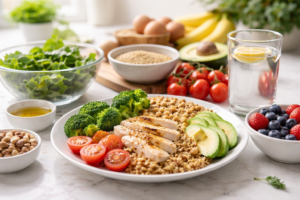
- Eat a balanced plate daily (protein + produce + carbs + healthy fat)
- Drink water consistently (not just when thirsty)
- Walk most days
- Do 2 short strength sessions weekly
- Reduce extreme dieting and “all-or-nothing” behaviors
Module 2 — Pregnancy Nutrition Basics: Practical, Not Perfect
During pregnancy, energy needs may increase, but the bigger priority is nutrient density. Think: “more quality,” not “more chaos.” Your body is doing extra work—building tissue, supporting blood volume changes, and maintaining maternal health.
2.1 The Balanced Plate (Simple Method)
Use this visual rule (works even if you hate tracking):
- 1/2 plate: colorful vegetables and fruit
- 1/4 plate: protein (eggs, poultry, fish per provider advice, beans, tofu, yogurt, lean meats)
- 1/4 plate: quality carbs (rice, potatoes, oats, whole grains, legumes)
- Add: healthy fats (olive oil, avocado, nuts, seeds)
2.2 Core Nutrition Priorities (Education Focus)
Pregnancy nutrition education commonly highlights these priorities:
- Protein: supports growth and maternal tissue repair.
- Iron: supports oxygen transport; low iron can worsen fatigue.
- Calcium: supports bone health and maternal needs.
- Folate/folic acid: commonly emphasized in maternal education.
- Iodine: often discussed as part of maternal nutrient awareness.
- Vitamin D: commonly discussed in general health.
- Fiber + fluids: support digestion and reduce constipation issues.
2.3 Hydration Rules (Real-World)
Hydration affects energy, digestion, and headaches. Try one of these simple rules:
- Rule A: Water with every meal + one bottle between meals.
- Rule B: A glass of water after every bathroom visit (easy memory trigger).
- Rule C: Start the day with water before coffee or tea.
2.4 A Simple “Pregnancy-Safe” Meal Pattern
Many people feel better with smaller, steady meals. Here is a common pattern:
- Breakfast: protein + carbs + fruit
- Snack: yogurt + nuts / fruit + nut butter
- Lunch: balanced plate
- Snack: smoothie / hummus + crackers / cheese + fruit
- Dinner: balanced plate
Note: If nausea is strong, “best possible” is the goal. Some days, survival foods are okay. We aim for progress over time.
Module 3 — Trimester-by-Trimester Guide: Adapt Like a Pro
This module helps you understand why cravings, nausea, fatigue, and appetite shifts happen, and how to respond without shame. This is education only; individual needs vary.
3.1 First Trimester (Common Challenges: nausea, fatigue, food aversions)
Goal: stabilize energy and reduce nausea triggers while staying hydrated.
- Try smaller meals more often.
- Keep “safe snacks” available (crackers, toast, bananas, yogurt, soups).
- Prioritize fluids (water, broths, electrolyte drinks if approved).
- Protein early can reduce nausea for some people (eggs, yogurt, smoothies).
3.2 Second Trimester (Common Challenges: “energy returns,” hunger increases)
Goal: build consistent nutrient density and movement rhythm.
- Return to balanced plate structure when possible.
- Focus on iron-rich and protein-rich meals consistently.
- Begin gentle strength work (provider-approved) to support posture and back.
- Address constipation early with fiber + fluids.
3.3 Third Trimester (Common Challenges: heartburn, sleep issues, reduced stomach space)
Goal: comfort, digestion support, and preparing for recovery.
- Smaller meals can reduce heartburn.
- Avoid lying down right after meals.
- Choose nutrient-dense snacks (yogurt, eggs, soups, smoothies).
- Movement can be lighter: walking, gentle mobility, breathing work.
Module 4 — Common Myths & Mistakes: Fix the Confusion
This section improves engagement and protects your audience from bad advice that spreads online.
4.1 Common Myths
- Myth: “Eat for two.”
Reality: Education often emphasizes quality and nutrient density over doubling intake. - Myth: “Avoid exercise completely.”
Reality: Many providers encourage safe, appropriate movement for most people, with individual screening. - Myth: “Spicy food harms the baby.”
Reality: Spice tolerance varies; comfort and digestion matter most. - Myth: “All weight gain is unhealthy.”
Reality: Healthy pregnancy involves body changes; discuss personal targets with a provider. - Myth: “Supplements replace food.”
Reality: Food quality still matters; supplements are individualized by providers.
4.2 Common Mistakes
- Skipping meals and then overeating at night
- Crash dieting or extreme restriction
- Too much caffeine (follow provider guidance)
- Low hydration (causes headaches, constipation, fatigue)
- Over-relying on ultra-processed foods without balancing nutrients
- Overtraining or ignoring pain signals
Module 5 — What NOT To Do: Safety Boundaries
This is one of the most valuable sections for liability protection and real-world safety.
5.1 Nutrition: What Not to Do
- Don’t follow extreme calorie restriction to control weight.
- Don’t self-prescribe supplements without professional guidance.
- Don’t follow internet “detox” plans during pregnancy.
- Don’t eliminate entire food groups unless medically necessary and supervised.
- Don’t ignore persistent vomiting or dehydration signs.
5.2 Movement: What Not to Do
- Don’t train through sharp pain (pain is feedback, not weakness).
- Don’t chase personal records while pregnant.
- Don’t copy advanced workouts from influencers without medical clearance.
- Don’t ignore pelvic floor symptoms (leaking, heaviness, pain).
5.3 Mindset: What Not to Do
- Don’t shame yourself for cravings, nausea, or fatigue days.
- Don’t compare your pregnancy to someone else’s online highlight reel.
- Don’t assume “hardcore” = better. Consistency wins.
Module 6 — Postpartum Nutrition & Recovery: Heal First, Then Rebuild
Postpartum is a recovery season. Your body has done major work. The goals are: healing, stable energy, mood support, and gradually returning strength.
6.1 Recovery Nutrition Basics
- Calories: recovery needs energy; restriction can backfire.
- Protein: supports tissue repair and muscle recovery.
- Iron + nutrient density: support energy and strength.
- Fluids: support recovery and (if breastfeeding) hydration needs.
- Fiber: supports digestion and reduces constipation strain.
6.2 Postpartum Movement Basics (Education Only)
Movement should restart gently. Many people benefit from:
- Short walks
- Breathing and posture resets
- Light mobility work
- Provider-approved progression to strength training
Rule: healing comes first. If movement causes pain, heaviness, leaking, or symptoms, pause and consult a professional.
Module 7 — Breastfeeding Nutrition: Simple, Sustainable, Repeatable
Breastfeeding is demanding. The key is a routine that supports hydration, steady calories, and nutrient-dense meals—without perfection pressure.
7.1 Hydration and Calories
- Drink regularly throughout the day.
- Eat balanced meals with snacks available.
- Do not “diet aggressively” unless medically supervised.
7.2 Breastfeeding-Friendly Meal Ideas
- Oats + yogurt + berries
- Eggs + toast + fruit
- Rice + beans + vegetables + olive oil
- Chicken + potatoes + salad
- Soup + bread + protein add-on
- Smoothie with protein + banana + nut butter
7.3 Practical Tip: “One-Hand Meals”
Breastfeeding caregivers often need quick foods. Keep easy options ready:
- Fruit, trail mix, yogurt
- Sandwiches / wraps
- Pre-cut vegetables and hummus
- Hard-boiled eggs
Module 8 — Nutrition & Movement Integration: A Daily Template
This is where Exercise Daily becomes different. We connect food + movement to make the plan practical.
8.1 Example “Real Life Day” (Pregnancy)
- Morning: water + protein breakfast
- Mid-morning: snack (fruit + nuts / yogurt)
- Midday: balanced lunch
- Afternoon: short walk + hydration
- Evening: balanced dinner
- Night: light snack if needed + sleep routine support
8.2 Example “Real Life Day” (Postpartum)
- Morning: hydration + easy breakfast
- Midday: balanced meal (prep-friendly)
- Movement: 10-minute walk + breathing resets
- Afternoon: snack + hydration
- Evening: dinner + early wind-down
8.3 The “Minimum Effective Dose” Rule
On hard days, you still win if you complete the minimum:
- Protein once
- Water twice
- Walk 10 minutes
- Sleep routine attempt
Module 9 — Practical Tools: Grocery Lists, Meal Templates, and Habit Trackers
9.1 Grocery List (Foundation)
- Proteins: eggs, yogurt, chicken, fish (provider guidance), beans, lentils, tofu
- Carbs: oats, rice, potatoes, whole grains
- Fruits/Vegetables: berries, bananas, leafy greens, carrots, tomatoes
- Fats: olive oil, nuts, seeds, avocado
- Easy extras: soups, hummus, nut butter
9.2 “3-Meal Template” (Repeat Weekly)
- Breakfast template: protein + carb + fruit
- Lunch template: balanced plate
- Dinner template: balanced plate + digestion-friendly options
9.3 Habit Tracker (Simple)
Track only 5 things (daily):
- Protein (yes/no)
- Hydration (yes/no)
- Vegetables/Fruit (yes/no)
- Movement (yes/no)
- Sleep routine attempt (yes/no)
Module 10 — Ethics, Privacy, and Communication
Pregnancy and postpartum are sensitive seasons. Education must be delivered with care and boundaries.
10.1 Ethical Standards
- Respect autonomy: mothers make choices in consultation with providers.
- Protect privacy: do not request personal medical details for content.
- Do not diagnose: direct health questions to professionals.
- Use supportive language: avoid shaming weight, cravings, or fatigue.
10.2 Communication Standard (EDML)
In EDML we “publish, promote, and train — simultaneously.” That only works when contributors communicate clearly. When you submit any draft, include:
- What you changed (short summary)
- Why you changed it (one sentence)
- Questions or concerns (bullet list)
Conclusion: The Real Win
Pregnancy nutrition is not about perfect eating. Postpartum nutrition is not about bouncing back. This is about supporting life, health, and recovery with realistic actions.
Remember: nutrition and movement work together. Food fuels tissue growth and repair. Movement supports mood, posture, circulation, and resilience. When you combine both safely, you create a stronger foundation for long-term wellness.
These are for informational purposes only. Consult your doctor and do your own research before use.
Exercise Daily — Eat daily, sleep daily, exercise daily.