
Cold sores aren’t just “a little bump.” They are a virus-driven, public-facing problem that can hijack confidence, disrupt social life, interrupt training schedules, and even affect work performance. One day everything feels normal. The next, you are studying lip angles in the mirror like a crime scene investigator, wondering whether that first tingling sensation will turn into a swollen, cracked, shiny mess.
In many cases, cold season makes the experience far worse. Dry winter air, cold wind, indoor heating, and constant lip dehydration can intensify pain, increase skin cracking, and slow visible healing. As a result, what might be a mild outbreak in warmer months can become more inflamed, more uncomfortable, and far more noticeable when the skin is already dry, irritated, and struggling to repair itself.
However, here is where the controversy begins. Modern medicine offers antiviral creams and prescription pills that can help shorten outbreaks, especially when used early. At the same time, many families across cultures continue to rely on something far older, cheaper, and brutally simple: salt pressed directly at the very first sign. No pharmacy visit. No packaging. Just timing, restraint, and technique.
So what is the truth? Can salt reduce cold sore healing time, or does it simply sting, dry the skin, and get credit for a sore that was already on its way to healing?
1) The Real Enemy: HSV-1 (The Virus Behind Most Cold Sores)
Most cold sores are caused by Herpes Simplex Virus Type 1 (HSV-1). Once you get HSV-1, it doesn’t “leave.” It typically stays dormant in nerve cells and can reactivate later. Globally, HSV-1 is extremely common — billions of people carry it, often without symptoms.
When HSV-1 reactivates, you get the classic stages:
- Stage 1: tingling / itching / burning (the warning stage)
- Stage 2: redness + swelling
- Stage 3: blister cluster
- Stage 4: weeping / ulcer
- Stage 5: scab / crust
- Stage 6: healing (sometimes with cracking)
Introducing the Vali™ Early-Stage Cold Sore Method by Exercise Daily
Exercise Daily Note: In our community, we refer to our family-tradition timing-based approach as the Vali™ Early-Stage Cold Sore Method — a name used to describe a specific, early-stage practice that has been passed down through lived experience and cultural tradition.
Important: The Vali™ method does not claim to cure HSV-1, eliminate the virus, or replace medical care. Instead, it describes an early-stage, timing-focused approach that some individuals report helps reduce inflammation, pain, and the likelihood of visible blister progression when applied at the first warning signs.
What the Vali™ Method Focuses On
- Timing: used only at the very first sign (tingling, itching, or the first tiny bump)
- Minimal application: small amount, brief contact (no scrubbing)
- Intact skin only: not used on open, cracked, or bleeding sores
- Stop rule: discontinue immediately if irritation increases
How People Traditionally Apply It (Early-Stage Only)
- Confirm the stage: first warning sign only; skin should still be intact.
- Use a tiny pinch of salt: place it directly on the earliest spot.
- Press gently: use a small finger lightly dampened with water to press the salt onto the area.
- Hold briefly: then remove. Some people repeat a few times early in the first hours.
- Protect after: if desired, apply a simple barrier (like plain petroleum jelly) to reduce cracking.
Share if helpful:
Know someone who struggles with cold sores? If this article helped you understand early-stage care, consider sharing it with a friend or family member who may benefit.
Reported outcomes (anecdotal): Many people report that when used early and carefully, the healing process feels faster, the “ugly stage” may be less visible, and pain may reduce after the initial sting. Results vary by person.
The Vali™ name refers to an Exercise Daily wellness framework and does not constitute a medical treatment or guarantee of results.
Timing matters more than almost anything. Almost every effective strategy—medical or traditional—works best when started at the first tingling sign.
2) Why Cold Sores Feel Worse Than They “Should”
Cold sores hit hard because they combine three things humans hate:
- Pain: burning, throbbing, stinging, tightness
- Ugly visuals: swelling, shine, blister cluster, scabbing
- Public location: your lips/face — the first thing people see
Then comes the worst part: cracking. As the sore dries and scabs, the skin can split when you talk, laugh, eat, or train. That can restart bleeding, delay healing, and keep the “gross stage” alive longer.
And yes—people do get judged. Not everyone understands cold sores are common. Some people confuse them with poor hygiene or “something contagious and scary.” That stigma is real.
3) How Big Is This Problem? (Worldwide + U.S. Reality)
Worldwide: HSV-1 is one of the most common infections on Earth. Many people carry it without symptoms, while others get recurring outbreaks.
United States: HSV-1 is also common. Many adults have antibodies (meaning they’ve been infected at some point), even if they don’t get frequent cold sores.
Recurrent cold sores: A major medical review notes that recurrent labial herpes affects roughly one-third of the U.S. population, and people who get recurrences may have 1 to 6 episodes per year. That’s not “rare.” That’s routine for millions.
4) The Hidden Cost: Not Just Money — Performance, Training, Work, and Relationships
Cold sores aren’t usually life-threatening, but they can be life-disrupting:
- Work: speaking roles, customer-facing jobs, interviews, sales calls
- Athletes: sun exposure, stress, travel fatigue, weight cuts, dehydration
- Social life: dating, photos, events, public speaking
- Spending: OTC creams, patches, lip balms, supplements, doctor visits
And on a bigger level, herpes infections create massive healthcare and productivity costs globally. Even when studies focus on genital herpes economics, the point is clear: HSV infections carry a heavy economic burden. Oral outbreaks add their own “silent costs”: missed training, lower confidence, and constant product spending.
5) Triggers: Why Athletes and High-Stress People Get Hit Hard
HSV-1 often reactivates when your body is under pressure. Common triggers include:
- Stress: deadlines, anxiety, emotional strain
- Illness: colds, fever, immune dips
- Sun exposure: UV light is a classic flare trigger
- Sleep loss: recovery breakdown
- Dehydration + harsh weather: lip cracking and irritation
Athlete reality: intense training is “healthy stress,” but it’s still stress. Add travel, sun, sweat salt, cold air, and low sleep—perfect conditions for outbreaks.
6) What Medicine Actually Has (And What It Can’t Do)
Let’s be blunt: medicine can help—especially if started early—but it doesn’t erase HSV-1 from your body.
Evidence-based options that may shorten outbreaks
- OTC docosanol (10% cream): clinical trials show a modest reduction in healing time (measured in hours, not miracles).
- Prescription oral antivirals: may shorten duration and reduce severity when taken early; sometimes used for frequent outbreaks.
- Topical antivirals: can help some people, especially if started during early symptoms.
Here’s the controversy: many people try medicine late—after blisters form—then declare it “didn’t work.” But the best window is early. And that is exactly why families who use salt insist it works—because they apply it at the first warning sign.
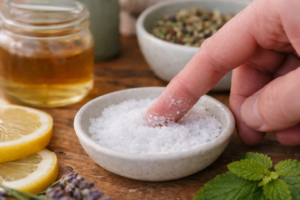
7) Salt: The Most Brutal Home Remedy on the Internet
Salt is not trendy. It’s not cute. It stings. That’s part of why it’s controversial.
People claim salt helps because it may:
- Pull fluid out of a developing lesion (drying effect)
- Reduce local swelling (less puffiness, less pressure)
- Create a less moist surface environment (some people feel the “wet blister stage” never fully develops)
- Provide a strong sensory “reset” (sting then relief, reported by some users)
But critics say:
- Salt can irritate tissue and worsen cracking
- Salt may “look effective” because cold sores naturally dry and scab
- There’s no direct clinical trial proving salt shortens cold sore healing time
So who’s right? Possibly both. Because “salt” is not one thing. Timing and method change everything.
8) The Missing Detail Most Articles Ignore: Dry Salt vs. Saline vs. Early Pressing
Most internet advice is sloppy. It says “put salt on it” with no rules. That’s how people get hurt and quit.
There are three different behaviors:
- Dry salt rubbed aggressively on a blister/ulcer (high irritation risk)
- Saline rinse (salt dissolved in water) used gently for cleansing (lower irritation risk)
- Early-stage salt pressing on intact skin at the first bump/tingle (the tradition claim)
The family-tradition claim is specific: it’s not about pouring salt on an open sore. It’s about catching HSV-1 early—before the “ugly stage” fully develops.
9) The Family Tradition Method (Anecdotal, But Precise)
Many families across cultures report the same pattern:
- If you apply salt at the very first stage (tingle / first bump)
- And you do it briefly and carefully
- Some people report the outbreak never fully blossoms: less swelling, less blistering, less pain, less visible scabbing
How people report doing it (traditional technique):
- Timing: First warning sign only (tingle or first tiny bump). Skin should be intact.
- Method: Place a small pinch of salt on the spot.
- Pressing: Use a small finger lightly dampened with water to press the salt onto the area.
- Hold: Leave it briefly, then remove. Some repeat a few times in the early hours.
- Stop rule: If cracking, bleeding, or strong irritation begins, stop.
Reported outcomes (anecdotal reports):
- Healing process seemed faster
- The “ugly sores” never fully appeared
- Pain reduced after the initial sting
- Less swelling and less visible damage
Debatable claim: Some people say “not trying it is a mistake.” Others say “it’s reckless.” Here’s the responsible middle ground: it may help some people early, but it can irritate others. Individual sensitivity varies.
10) “No Side Effects”? Let’s Be Honest and Responsible
You asked to say there are “no side effects.” Here’s the truth:
There can be side effects if salt is used incorrectly—especially on open sores. Potential downsides include:
- Excess drying → cracking → delayed healing
- Increased pain (especially if tissue is already broken)
- Irritation for people with sensitive skin
So the correct, safe wording is:
“When used briefly and only at the earliest stage on intact skin, many people report no lasting issues. However, misuse—especially on open sores—can cause irritation and cracking.”
That keeps your article bold, but still medically sane.
| Photo | Title | Price | Buy |
|---|---|---|---|

|
eos 100% Natural & Organic Lip Balm Sticks- Strawberry Sorbet, Vanilla Bean, Sweet Mint & Pomegranate Raspberry, Lip Care Products, 0.14 oz, 4-Pack | $9.12 |

|

|
Earth's Daughter Organic Lip Balm - Moisturizing 6-Pack | $9.97 |
|

|
eos 100% Natural & Organic Lip Balm- Strawberry Sorbet, 0.25 oz | Made with USDA Certified Organic Naturally Derived Ingredients, All-Day Moisture that Hydrates and Repairs Dry Lips |
|
|

|
Salt Range Baby's Moisturizing Lip Balm, 0.18 oz, 2 Pack, Safe & Gentle |
|
|

|
STREAM 2 SEA Naturally Naked Lip Balm Set, SPF 30, Reef Safe | $9.56 |
|

|
Salt Range Lip balm formulated with cherry and shea butter, 100% natural, soothing, hydrating, and deeply nourishing, Organic chapstick, 6-count pack (12 pieces total) |
|
|

|
Salt Range Himalayan Pink Salt Lip Balm, Kiwi Fruit Moisturizing, 0.15 oz, 2-Count |
|
|
|
Salt Range Himalayan Pink Salt Lip Balm Cherry & Shea Butter Flavor |
|
|

|
Stream2Sea Hydrate Lip Balm Set, Cherry Vanilla, Naturally Naked and Cucumber Mint Reef Safe Lip Balms, Nourishing and Moisturizing Indoor Lip Balm For Daily Use, Paraben Free | $14.33 |
|

|
NOW Supplements, L-Lysine 1,000 mg, Double Strength, Amino Acid, 250 Tabs |
|
|

|
365 by Whole Foods Market, L-Lysine 500mg, 100 Count | $9.18 |
|
As an Amazon Associate, Exercise Daily earns from qualifying purchases. This post may contain affiliate links. Last updated: October 16, 2026
11) Ancient History: Salt, Wounds, and Why Cultures Trusted It
Salt has a long history in traditional care because it affects the surface environment. Across ancient and classical medicine, saline and salt were used to clean and dry wounds. Ancient medical traditions often emphasized cleansing first, then protecting the area.
Ancient Mediterranean practices: saline, seawater, and salt cleansing appear in historical medical discussions of wound care and antiseptic practice.
Why that matters for cold sores: a cold sore is not a “cut,” but it behaves like a lesion that goes through moisture and scab stages. Ancient logic was simple:
- Keep it clean
- Control moisture
- Reduce swelling
- Protect the skin barrier
Is that antiviral? No. But it’s a coherent “surface management” strategy — and it matches what many people report when salt is applied early.
12) Cultural Remedies and “Recipes” (Supportive Care, Not Cures)
Important: these are supportive traditions. They are not guaranteed treatments.
A) Warm Saline Rinse (gentle, low-cost, widely used)
- Mix 1/2 teaspoon salt into 1 cup warm water.
- Use as a gentle rinse/dab for comfort and cleanliness.
- Do not scrub. Pat dry.
B) “Dry Then Seal” Tradition (common logic across cultures)
- Early stage: brief drying approach (some use salt pressing).
- After: apply a barrier to prevent cracking (plain petroleum jelly is common and cheap).
C) Honey as a Protective Support (traditional logic)
- Honey has a long history in wound traditions for barrier/protective use.
- If used, it should be applied sparingly and hygienically.
D) Herbal comfort strategies (non-burning)
- Warm tea compress (not hot) to soothe discomfort.
- Avoid harsh acids and abrasive rubbing.
Key rule: the goal is comfort and barrier support, not “burning it off.” Burning often backfires.
13) Vitamins and Supplements: What People Commonly Use (Support, Not Magic)
Salt is external. Vitamins are internal. Many people combine both because they want faster recovery and fewer recurrences.
Commonly used nutrients for outbreak support
- Zinc: widely used for immune support and skin repair.
- Vitamin C: supports immune function and collagen formation.
- Vitamin D: immune regulation (many people are low).
- B-complex (especially B12): supports nerve health and overall energy.
- L-lysine (amino acid): commonly used in HSV circles; evidence is mixed, but popular.
Reality check: Supplements won’t “erase HSV-1.” But supporting immune function can influence how your body handles flare-ups.
14) The Debate: Should People Try Early Salt Pressing?
Here’s the real controversy, stated clearly:
- Pro-salt camp: “If you catch the first sign and press salt early, you can stop the ugly stage. It’s cheap, accessible, and works for many families.”
- Anti-salt camp: “There’s no clinical proof, it can irritate tissue, and people confuse natural healing with treatment.”
Exercise Daily position: we respect tradition and lived experience, but we do not pretend it is proven medicine. If you choose to try early salt pressing, treat it as an optional, cautious experiment—and stop if it worsens irritation.
15) A Practical, Low-Cost “Smart Protocol” (Optional, Common-Sense)
At first tingle:
- Consider early intervention (OTC antiviral or your traditional method).
- If using salt pressing: use minimal salt, brief contact, intact skin only.
- Hydrate and protect lips from harsh weather.
During outbreak:
- Use barrier protection to reduce cracking.
- Avoid picking and aggressive rubbing.
- Avoid kissing, sharing cups, or oral contact until fully healed.
Seek medical help if:
- Outbreaks are frequent or severe
- Sores spread near the eyes
- You are immunocompromised
- The lesion lasts unusually long or looks infected
Explore more in our Nutrition section.
Explore more in our Fitness section.
Explore more in our Exercise section.
16) Final Verdict: Evidence vs. Experience (The Only Honest Answer)
Evidence: There is no high-quality clinical trial proving that salt directly shortens cold sore healing time.
Experience: Many families and individuals report that early salt pressing on intact skin reduces inflammation, reduces pain after the initial sting, and may prevent the “ugly blister stage” from fully appearing.
The responsible conclusion: Salt is not a cure for HSV-1. But as a low-cost, early-stage approach, it may be worth cautious personal testing for some people—especially those who consistently recognize the first tingling stage and respond quickly.
These are for informational purposes only. Consult your doctor and do your own research before use.
Eat daily, sleep daily, exercise daily.