
Exercise Daily _ Beginner Friendly Resistance Band Workout
Resistance bands are an often-overlooked tool for beginners looking to enhance their fitness journey. Despite their simplicity, these bands can deliver an effective workout that rivals traditional weights. This article will explore the benefits of resistance band workouts, provide a structured routine, address common misconceptions, and present counterarguments to the prevailing views on strength training.
Explore more in our Natural Remedies section.
Explore more in our Wellness section.
Explore more in our Nutrition section.
Understanding Resistance Bands
Resistance bands are elastic bands designed to provide resistance during exercises. They come in various shapes, sizes, and resistance levels, making them suitable for individuals of all fitness levels. Unlike free weights, resistance bands offer a unique advantage: they provide variable resistance, meaning the resistance increases as the band is stretched. This characteristic allows for a safe and effective workout that can be tailored to individual capabilities.
The Benefits of Resistance Bands
- Versatility: Resistance bands can be used to target almost every muscle group, making them ideal for a full-body workout.
- Portability: Lightweight and compact, resistance bands can easily fit into a gym bag or suitcase, allowing for workouts anywhere.
- Joint Safety: Bands offer a low-impact workout that is easier on the joints compared to traditional weightlifting.
- Progressive Resistance: As you get stronger, you can easily increase resistance by using bands with higher tension or by combining multiple bands.
Common Misconceptions About Resistance Bands




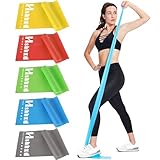
Despite the numerous advantages of resistance bands, some misconceptions persist. Let’s address a few of them:
1. Resistance Bands Are Only for Beginners
While resistance bands are indeed beginner-friendly, they are not exclusively for novices. Many advanced athletes incorporate bands into their training regimens to enhance strength, flexibility, and stability. Research indicates that resistance training with bands can lead to significant strength gains comparable to traditional weights (Peterson et al., 2010, PubMed).
2. Bands Don’t Provide Enough Resistance
Another common belief is that resistance bands cannot provide sufficient resistance for effective strength training. However, bands come in various resistance levels, and many exercises can be modified to increase intensity. A study published in the Journal of Sports Science found that resistance bands can produce similar muscle activation as free weights (Mazzoccoli et al., 2020).
3. Resistance Band Workouts Are Ineffective for Building Muscle
Some skeptics argue that resistance bands are ineffective for hypertrophy. However, muscle growth is primarily stimulated by mechanical tension, metabolic stress, and muscle damage, all of which can be achieved with resistance bands. A systematic review published in the Journal of Strength and Conditioning Research supports the effectiveness of resistance bands in promoting muscle hypertrophy (Schoenfeld, 2010).
Beginner-Friendly Resistance Band Workout Routine
Now that we have established the benefits and addressed misconceptions, let’s dive into a structured beginner-friendly resistance band workout. This routine targets all major muscle groups and can be performed at home or in a gym setting.
Workout Overview
This workout consists of six exercises, each designed to engage different muscle groups. Complete 2-3 sets of 10-15 repetitions for each exercise, resting for 30-60 seconds between sets. Adjust the band resistance according to your fitness level.
1. Band Squats
Target Muscles: Quadriceps, hamstrings, glutes
Stand on the band with feet shoulder-width apart, holding the handles at shoulder height. Squat down as if sitting in a chair, keeping your chest lifted. Return to standing.
2. Seated Row
Target Muscles: Upper back, biceps
Sit on the floor with your legs extended. Loop the band around your feet and hold the ends. Pull the band toward your torso, squeezing your shoulder blades together. Slowly return to the starting position.
3. Chest Press
Target Muscles: Chest, shoulders, triceps
Anchor the band behind you at chest height. Hold the handles and press them forward until your arms are fully extended. Return to the start position.
4. Standing Lateral Raises
Target Muscles: Shoulders
Stand on the band with feet hip-width apart. Hold the handles at your sides and lift your arms laterally until they reach shoulder height. Lower back down.
5. Glute Bridge with Band
Target Muscles: Glutes, hamstrings
Lie on your back with knees bent and feet flat on the floor. Place the band around your thighs, just above your knees. Lift your hips toward the ceiling while squeezing your glutes. Lower back down.
6. Band Bicep Curl
Target Muscles: Biceps
Stand on the band with feet shoulder-width apart. Hold the handles with palms facing up. Curl your arms toward your shoulders, then lower back down.
Addressing Counterarguments
While many advocates promote resistance band workouts, some argue that they cannot replace traditional weightlifting. However, it’s essential to recognize that both modalities serve distinct purposes. Resistance bands are excellent for rehabilitation, mobility work, and functional training, while free weights are often favored for building raw strength and mass.
Moreover, combining both methods can yield optimal results. A study published in the American Journal of Lifestyle Medicine suggests that integrating resistance bands with traditional weight training can enhance overall performance (Hoffman et al., 2015).
Nutrition for Optimal Performance
To maximize the benefits of your resistance band workouts, proper nutrition is crucial. Consuming a balanced diet rich in protein, healthy fats, and complex carbohydrates will support muscle recovery and growth. Consider incorporating the following quick and nutritious recipe into your routine:
High-Protein Banana Oatmeal
This easy recipe provides a great source of protein and energy, perfect for fueling your workouts.
- 1 cup rolled oats
- 2 cups water or milk
- 1 ripe banana, mashed
- 1 scoop protein powder (optional)
- 1 tablespoon honey or maple syrup (optional)
- 1/2 teaspoon cinnamon
In a pot, combine oats and water/milk. Bring to a boil, then reduce to a simmer. Stir in the mashed banana, protein powder, honey, and cinnamon. Cook until the oats are tender. Serve warm.
Conclusion
Resistance band workouts are an excellent starting point for beginners seeking to enhance their fitness regimen. They provide versatility, safety, and effectiveness in building strength. By debunking common misconceptions, we can encourage more individuals to incorporate resistance bands into their routines. Whether you’re a novice or an experienced athlete, resistance bands can complement your training and help you achieve your fitness goals.
For more information on different exercises and fitness tips, check out our exercise category or explore our fitness section.
- Peterson, M. D., et al. (2010). Resistance exercise for the treatment of sarcopenia. PubMed
- Mazzoccoli, G., et al. (2020). Resistance training with elastic bands: a systematic review. Journal of Sports Science
- Schoenfeld, B. J. (2010). The mechanisms of muscle hypertrophy and their application to resistance training. Journal of Strength and Conditioning Research
- Hoffman, J. R., et al. (2015). Resistance Training and Health Outcomes. American Journal of Lifestyle Medicine
These are for informational purposes only. Consult your doctor and do your own research before use.
Eat daily, sleep daily, exercise daily.