
Exercise Daily _ Basketball Agility Drills For Youth
Basketball is not just about shooting hoops; it demands a range of skills, with agility ranking high on the list. Agility, the ability to change direction quickly while maintaining speed, is crucial for young athletes. This article delves into the significance of basketball agility drills for youth, exploring their benefits, common misconceptions, and the best practices for implementation.
Explore more in our Natural Remedies section.
Explore more in our Wellness section.
Explore more in our Nutrition section.
The Importance of Agility in Basketball
Agility is a multifaceted attribute that combines speed, coordination, balance, and reaction time. In basketball, players must frequently shift their weight, pivot, and dash in various directions, making agility a game-changer. According to a study published in the Journal of Sports Science, agility training significantly enhances performance in basketball by improving players’ ability to respond to dynamic game situations.
Key Benefits of Agility Drills
- Enhanced Performance: Agility drills improve overall performance on the court, allowing players to maneuver past defenders more effectively.
- Injury Prevention: Training for agility helps strengthen muscles and joints, reducing the risk of injuries, particularly in the knees and ankles.
- Improved Coordination: These drills enhance hand-eye coordination and overall body awareness, essential for executing complex plays.
- Increased Confidence: Mastering agility drills boosts players’ confidence, enabling them to perform under pressure.
Common Misconceptions About Agility Training
Despite the clear benefits, several misconceptions surround agility drills for youth basketball players. These misunderstandings can lead to ineffective training practices.
Misconception 1: Agility Drills Are Only for Advanced Players
Many believe that agility training is only necessary for advanced players. In reality, youth can benefit immensely from starting agility drills early. A study in the Journal of Strength and Conditioning Research indicates that early exposure to agility training can lay a strong foundation for future athletic development.
Misconception 2: More Drills Equal Better Results
Another prevalent belief is that performing more drills will yield better agility. However, quality trumps quantity. Focused, well-structured drills that emphasize technique and proper form are more effective than an overwhelming number of poorly executed exercises. A systematic review in Sports Medicine emphasizes the importance of technique in agility training.
Essential Basketball Agility Drills for Youth
Implementing agility drills that suit the developmental stage and skill level of young athletes is crucial. Here are some effective drills to consider:
1. Ladder Drills
Ladder drills are a fantastic way to improve foot speed, coordination, and agility. They can be tailored to various skill levels.
- Basic Ladder Drill: Have players step in and out of each rung of the ladder, focusing on quick feet.
- Side Shuffle: Players move sideways through the ladder, emphasizing lateral movement.
- In-and-Out Drill: Players start outside the ladder, stepping in and out of the rungs, alternating feet.
2. Cone Drills
Cone drills are excellent for developing direction change and acceleration.
- T-Drill: Set up cones in a T formation. Players sprint to the middle cone, shuffle to each side cone, and back to the start.
- Figure Eight: Place two cones about 5-10 feet apart. Players weave in a figure-eight pattern around the cones.
- Pro Agility Drill: Set up three cones in a straight line, 5 yards apart. Players sprint to the first cone, back to the second, and then back to the start.
3. Shuttle Runs
Shuttle runs enhance speed and change of direction. To execute:
- Set two cones 10-15 yards apart.
- Players sprint from one cone to the other, touching the ground at each cone before returning.
4. Ball Handling Agility Drills
Integrating ball handling with agility drills can improve overall basketball skills.
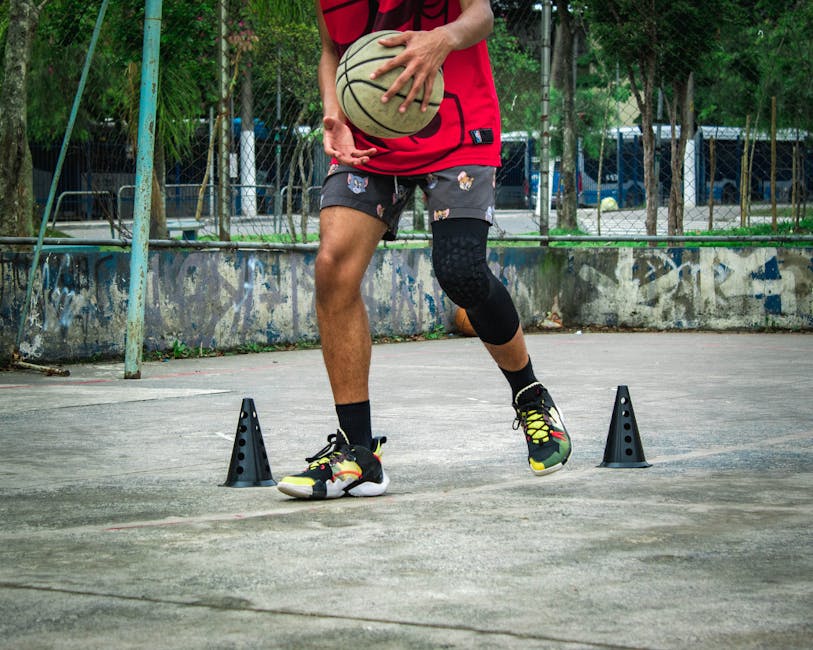
- Dribble Through Cones: Set up cones in a line. Players dribble through them, focusing on maintaining speed and control.
- Zig-Zag Dribble: Players dribble in a zig-zag pattern through cones, changing directions quickly.
Implementing Agility Drills in Practice
To maximize the effectiveness of these agility drills, consider the following strategies:
1. Warm-Up and Cool Down
Always include a warm-up and cool down in practice sessions. This can include dynamic stretches to prepare the body for high-intensity activity, as highlighted by the American College of Sports Medicine.
2. Focus on Technique
Encourage players to prioritize proper form over speed. This not only maximizes benefits but also minimizes injury risks. A study in Sports Health emphasizes that proper technique is vital for effective training.
3. Modify Drills for Age and Skill Level
Tailor drills to the players’ age and skill level. Younger athletes may benefit from simpler drills, while older players can handle more complex movements.
4. Incorporate Game-Like Scenarios
Integrate agility drills into game-like situations. This helps players understand how agility translates to on-court performance, as supported by research in the Journal of Sports Sciences.
Counterarguments and Considerations
While agility drills are essential, some argue that they may lead to burnout or overtraining in youth athletes. It is crucial to balance agility training with other aspects of basketball, such as skill development and physical conditioning. Additionally, coaches should be vigilant about monitoring players’ workloads and ensuring adequate rest and recovery.
Balancing Agility with Other Skills
Focusing solely on agility can detract from other critical skills such as shooting, passing, and teamwork. Coaches should strive for a holistic approach, integrating agility drills with fundamental basketball skills. This approach aligns with the findings of a study published in the International Journal of Sports Physiology and Performance, which emphasizes the importance of well-rounded training.
Conclusion
Basketball agility drills for youth are essential for developing young athletes’ skills. By understanding the importance of agility, addressing common misconceptions, and implementing effective drills, coaches can significantly enhance their players’ performance. Balancing agility training with other basketball skills will lead to well-rounded athletes capable of excelling on the court.
For more insights on exercise, fitness, and wellness, consider exploring our resources at Exercise Daily and Fitness.
- Journal of Sports Science
- Journal of Strength and Conditioning Research
- Sports Medicine
- American College of Sports Medicine
- Sports Health
- Journal of Sports Sciences
- International Journal of Sports Physiology and Performance
Eat daily, sleep daily, exercise daily.
These are for informational purposes only. Consult your doctor and do your own research before use.