
Exercise Daily _ Best Beginner Kettlebell Routine At Home
Kettlebell training has surged in popularity, especially among beginners seeking an effective home workout. While some enthusiasts rave about its benefits, others remain skeptical. This article will explore the best beginner kettlebell routine at home, backed by evidence, while addressing common misconceptions and counterarguments. Let’s dive into the world of kettlebells and discover how to maximize their potential for your fitness journey.
Understanding Kettlebells: What Sets Them Apart?
Kettlebells are unique fitness tools that combine elements of strength training and cardiovascular conditioning. Their design—an off-centered weight—encourages dynamic movements that engage the entire body. Unlike traditional weights, kettlebells promote functional fitness, which can translate to improved performance in everyday activities.
Research supports the efficacy of kettlebell training. A study published in the Journal of Strength and Conditioning Research found that kettlebell training significantly improved cardiovascular endurance, strength, and flexibility among participants. However, many beginners misunderstand the correct techniques and routines, leading to suboptimal results and potential injury.
What Most People Get Wrong About Kettlebell Training
Despite its benefits, many beginners fall into common traps. Here are a few of the most prevalent misconceptions:
- Only for Advanced Users: Many believe kettlebells are too complex for beginners. In reality, with proper guidance, they can be highly accessible.
- It’s All About Strength: While kettlebells build strength, they also enhance coordination, balance, and endurance.
- Heavy Weights are Essential: Many think they need heavy kettlebells to see results. Starting light and focusing on form is crucial for beginners.
Understanding these misconceptions is vital for anyone looking to incorporate kettlebell training into their routine. Now, let’s explore the best beginner kettlebell routine that you can do at home.
Essential Equipment
Before starting your kettlebell journey, ensure you have the right equipment. For beginners, a kettlebell weighing between 8 to 16 kg (about 18 to 35 lbs) is typically recommended, depending on your current fitness level. Additionally, having a yoga mat can provide comfort during floor exercises.
Warm-Up: Preparing Your Body
Warming up is essential to prevent injuries and improve performance. Here’s a simple five-minute warm-up routine:
- Arm Circles: 30 seconds
- Leg Swings: 30 seconds per leg
- Hip Circles: 30 seconds
- Bodyweight Squats: 1 minute
- Jog in Place: 2 minutes
This warm-up will increase blood flow to your muscles and prepare your body for the kettlebell exercises that follow.
9 Best Adjustable Kettlebells for Home Workouts and Exercise
Beginner Kettlebell Routine
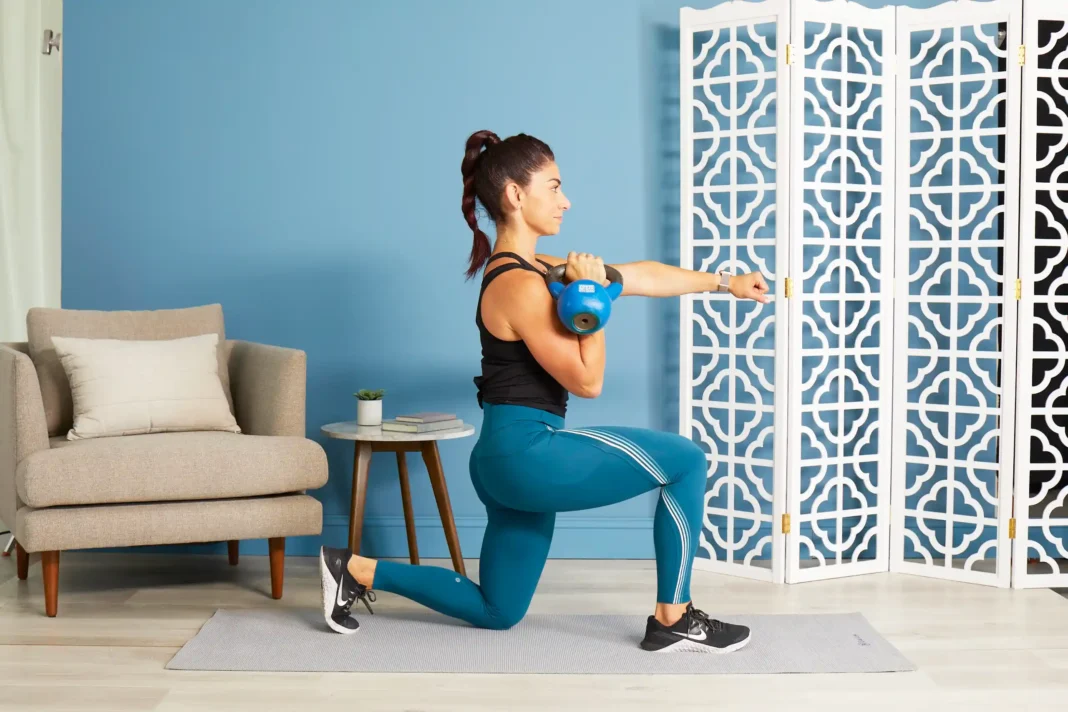
The following routine is designed for beginners and focuses on fundamental movements that build strength, coordination, and endurance. Aim to perform this routine 2-3 times per week.
1. Kettlebell Deadlift
This exercise targets your posterior chain, including the hamstrings, glutes, and lower back.
How to Perform: Stand with your feet hip-width apart, with the kettlebell between your feet. Hinge at your hips, keeping your back straight, and grab the kettlebell with both hands. Stand up by driving through your heels, squeezing your glutes at the top. Repeat for 10-12 reps.
2. Kettlebell Goblet Squat
The goblet squat is an excellent way to develop lower body strength and improve squat form.
How to Perform: Hold the kettlebell close to your chest with both hands. Stand with your feet shoulder-width apart. Lower into a squat, keeping your chest up and elbows inside your knees. Push through your heels to return to standing. Perform 10-12 reps.
3. Kettlebell Swing
The kettlebell swing is a powerful movement that improves cardiovascular fitness and engages multiple muscle groups.
How to Perform: Stand with your feet slightly wider than hip-width apart, holding the kettlebell with both hands. Hinge at your hips and swing the kettlebell between your legs. Drive your hips forward, swinging the kettlebell to shoulder height. Keep your arms straight but relaxed. Complete 10-15 reps.
4. Kettlebell Press
This upper body exercise builds shoulder strength and stability.
How to Perform: Hold the kettlebell at shoulder height with your elbow tucked in. Press the kettlebell overhead until your arm is fully extended. Lower it back to shoulder height. Aim for 8-10 reps per arm.
5. Kettlebell Row
The kettlebell row targets the back muscles and improves posture.
How to Perform: Stand with your knees slightly bent, hinge at your hips, and hold the kettlebell in one hand. Pull the kettlebell towards your ribcage, keeping your elbow close to your body. Lower it back down. Perform 10-12 reps per arm.
6. Kettlebell Russian Twist
This exercise engages the core, promoting stability and rotational strength.
How to Perform: Sit on the floor with your knees bent and feet flat. Hold the kettlebell with both hands, lean back slightly, and lift your feet off the ground. Twist your torso to one side, then the other, while keeping the kettlebell close to your body. Complete 10-15 reps per side.
Sample Weekly Schedule
Here’s a sample weekly schedule to incorporate your kettlebell routine:
- Monday: Kettlebell Routine
- Tuesday: Rest or Light Cardio
- Wednesday: Kettlebell Routine
- Thursday: Rest or Flexibility Training
- Friday: Kettlebell Routine
- Saturday: Active Recovery (e.g., walking, yoga)
- Sunday: Rest
This schedule allows for recovery while ensuring consistent progress. Remember, consistency is key in any fitness routine.
Common Mistakes to Avoid
As you embark on your kettlebell journey, be aware of these common mistakes:
- Poor Form: Always prioritize form over weight. Poor technique can lead to injuries and negate the benefits of the exercise.
- Skipping Warm-Ups: Neglecting warm-ups can increase the risk of injury. Always prepare your body for the workout ahead.
- Overtraining: More is not always better. Allow your body adequate recovery time to prevent burnout and injury.
By avoiding these pitfalls, you’ll enhance your kettlebell training experience and achieve better results.
Nutrition for Optimal Performance
While kettlebell training is effective, optimizing your nutrition can significantly enhance your results. A balanced diet rich in whole foods supports your training efforts and overall well-being. For more detailed nutritional guidance, explore our nutrition resources.
Conclusion: Embrace the Kettlebell Journey
The best beginner kettlebell routine at home can transform your fitness journey when approached with the right mindset and techniques. By understanding the fundamentals, avoiding common mistakes, and incorporating proper nutrition, you can experience the full benefits of kettlebell training. Remember, consistency is crucial. As you progress, consider exploring advanced techniques and heavier weights to continue challenging yourself.
In conclusion, kettlebells are not just for seasoned athletes; they are an excellent tool for beginners too. Embrace the kettlebell journey, and you will be well on your way to achieving your fitness goals.
- Journal of Strength and Conditioning Research
- NIH Study on Kettlebell Training
- WHO Physical Activity Guidelines
- PubMed Study on Functional Fitness
Eat daily, sleep daily, exercise daily.
These are for informational purposes only. Consult your doctor and do your own research before use.