


Exercise Daily _ Okra Fenugreek Microplastics Study: What Science Shows, What It Doesn’t, and Why Ignoring These Foods Is a Mistake
In recent months, a simple claim has gone viral across social media and wellness blogs: okra and fenugreek can detox microplastics from the body.
Videos show jars of cloudy okra water, soaked fenugreek seeds, and confident captions promising protection from one of modern life’s most alarming threats.
The truth, as usual, is more complex — and far more interesting.
Microplastics: The Global Problem Most People Still Underestimate
Let’s zoom out for one second. Microplastics are not a “new wellness trend.” They are an environmental and public health issue that is still being measured in real time.
Microplastics have been detected across the planet: in oceans, rivers, lakes, soil, indoor dust, seafood, salt, and drinking water. The biggest issue is not one single source — it’s the fact that exposure is constant and often invisible.
The reason microplastics matter is simple: if something is everywhere in your environment, it becomes part of your daily intake without your permission. And unlike nutrients, microplastics were never meant to be in human bodies.
Where microplastics show up (even when you’re not thinking about it)
- Bottled water: plastic bottles can shed tiny particles, especially with heat, storage time, and repeated handling.
- Tap water: depending on the source and infrastructure, microplastics can enter through upstream contamination and distribution systems.
- Food containers: especially when plastic is heated, scratched, or reused; lids, liners, and takeout containers all matter.
- Clothing and laundry: synthetic fabrics (polyester, nylon, acrylic) shed fibers; washing releases microfibers that reach waterways.
- Indoor dust: fibers and fragments settle in homes, cars, and gyms — then end up in the mouth through normal breathing and swallowing.
- Swimming water: pools, lakes, rivers, and oceans can contain microplastics; open water environments are major collection zones.
- Seafood and food chains: microplastics accumulate across ecosystems, and food is one of the final delivery systems.
This is why the okra fenugreek microplastics study matters. It showed that certain natural plant polysaccharides can bind microplastics in water. That is not a “detox story.” It is a “contamination is real and removal is needed” story.
And here’s the argument most people avoid: if microplastics are everywhere in water systems, waiting for perfect human trials before taking basic precautions is not intelligence — it’s denial.
There is a real scientific study.
It does involve okra and fenugreek.
And it does show impressive results.
But it does not prove that eating these foods detoxifies microplastics from the human body.
That distinction matters. At the same time, dismissing the study entirely would also be a mistake.
This article exists to do what most viral posts do not: explain the science accurately, explore what it might imply, and place the findings in a broader nutritional, cultural, and fitness-focused context.
What the Okra Fenugreek Microplastics Study Actually Proved
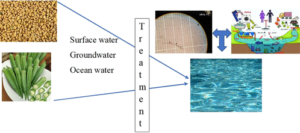
Researchers examined natural plant polysaccharides extracted from okra and fenugreek and tested their ability to remove microplastics from contaminated water.
These polysaccharides are long-chain plant fibers that become sticky or gel-like when mixed with water.
When added to contaminated water, the extracts caused microplastics to clump together, become heavier, and settle out.
This process is known as flocculation, a standard method used in water treatment.
What made the findings notable was not just that flocculation occurred, but that these natural extracts performed as well as — and in some cases better than — commonly used synthetic flocculants.
Fenugreek extracts were particularly effective in groundwater samples, while okra performed strongly in saltwater conditions.
This is not folk medicine. It is chemistry.
Microplastics and Human Health: What We Know, What We Suspect, and Why Waiting Isn’t Required
We need to be honest about the health conversation. The scientific community is still working to understand the full impact of microplastics and nanoplastics on human health.
That does not mean “no risk.” It means we are early in the research timeline for a massive global exposure problem.
So what are the real concerns?
Researchers are investigating links between microplastic exposure and inflammation, oxidative stress, endocrine disruption potential, and the possibility that very small particles (nanoplastics) may cross biological barriers.
Some studies have detected microplastics in human samples, which is enough to justify serious attention — even while exact cause-and-effect outcomes are still being clarified.
Now let’s connect this to the reality of how the human body works.
People love to say “the body is about 70% water.” Whether you prefer the exact number or not, the core point stands: your body relies heavily on water-based systems — blood, lymph, digestive fluids, intracellular fluids, and the entire transport network that moves nutrients and waste.
That means water quality is not a small issue. It’s a foundational issue.
When contaminants are present in water, they don’t just “stay in water.” They intersect with digestion, metabolism, hormones, and immune regulation over time.
The key point: We don’t need to wait for perfect science to act responsibly
There’s a simple principle used in public health and risk management: the precautionary principle.
It basically means: if an exposure is widespread and plausible harm exists, you take reasonable low-risk steps to reduce exposure while research continues.
That’s not panic. That’s maturity.
You don’t wait for decades of damage before choosing smarter defaults — especially when the safest actions are cheap and simple.
This is exactly how we should interpret the okra and fenugreek findings:
- The study showed natural plant compounds can bind microplastics in water.
- It did not prove human detox — and we should not claim that.
- But it strengthens the argument that microplastics are removable in principle, and that plant-based binding agents deserve more research.
- Meanwhile, the smart move is to reduce exposure and improve daily habits.
So yes — we can take action now, without lying, without overclaiming, and without waiting for the internet to “approve” it.
What the Study Did NOT Prove (And Why Headlines Got It Wrong)
The study did not test humans. It did not test digestion. It did not show microplastics being removed from blood, organs, or tissues.
Any headline suggesting “okra water detoxes microplastics from the body” goes beyond what the research actually demonstrated.
Still, science does not exist in isolation.
Studies raise questions, and responsible inquiry means asking what those questions are — without exaggeration.
The Most Important Follow-Up Question
The most important question raised by this research is not whether okra or fenugreek “detox” microplastics from human tissues.
It is whether their unique fiber properties could influence exposure, particularly in the digestive tract where most microplastics enter the body.
That question remains unanswered — but it is not unreasonable.
The Gut: Where This Conversation Gets Real
To understand why this conversation matters, we need to talk about the human gut.
The digestive tract is a dynamic, fluid environment where food, water, bile, mucus, enzymes, and fiber interact constantly.
Most microplastics enter the body through ingestion: drinking water, packaged foods, seafood, supplements, and even airborne particles that are swallowed unknowingly.
Soluble fiber already plays a well-established role in digestion.
It absorbs water, forms gels, slows gastric emptying, binds bile acids, and increases stool bulk.
These effects reduce contact time between unwanted substances and the intestinal lining, helping move waste through the body more efficiently.
Okra and fenugreek are not ordinary fiber sources.
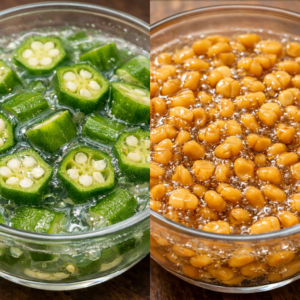
They are mucilaginous foods, meaning they form thick, gel-like substances when exposed to liquid.
Anyone who has sliced fresh okra or soaked fenugreek seeds has seen this.
This gel-forming behavior is exactly what made these plants effective in the water study.
But what science does not yet know is whether the same binding behavior could influence how microplastics behave in the digestive tract — for example, by binding some particles before they cross the gut barrier.
That has not been proven in humans, and it should not be claimed as fact.
Reduced Exposure Is Not the Same as “Detox”
Reducing ongoing exposure is not the same as claiming detoxification.
Even if microplastics already present in tissues are difficult to remove, reducing new exposure is a sensible goal.
That’s why this article is focused on exposure management, not detox hype.
High-quality soluble fiber can support gut transit time, stool formation, and elimination.
That does not guarantee microplastic removal from tissues — but it does support the body’s normal systems that move waste out efficiently.
Why Never Eating Okra or Fenugreek Is a Big Nutritional Loss
Regardless of microplastics, removing okra and fenugreek from modern diets eliminated an entire category of functional, whole-food fibers.
They were replaced by refined carbohydrates, synthetic fiber powders, and ultra-processed thickeners.
Avoiding these foods because they are “slimy” or “bitter” is not a health strategy — it is a cultural preference shaped by a narrow food environment.
For most of human history, foods were valued for what they did, not how trendy they looked.
Whether or not future research ever proves a role for these foods in reducing microplastic absorption, they already offer benefits modern diets struggle to replicate: whole-food soluble fiber, natural viscosity, digestive support, and low cost.
| Photo | Title | Price | Buy |
|---|---|---|---|

|
Blessfull Healing Organic Okra Powder 100% Pure Natural 100 Gram / 3.52 oz | $24.50 |

|

|
BulkSupplements.com Okra Extract Powder - Okra Supplement, Source of Fiber, Herbal Supplement - Vegan & Gluten Free, 500mg per Serving, 500g (1.1 lbs) (Pack of 1) | $27.97 |
|

|
Standard Process Okra Pepsin E3 - Gastrointestinal & Gut Health Supplement - Supports Protein Digestion & Regular Digestive Function - Gluten-Free, Non-Dairy & Non-Soy - 90 Capsules (90 Servings) | $45.01 |
|

|
Talk O' Texas Crisp Mild Okra Pickles - 16 oz Glass Jar | $11.54 |
|

|
Nutricost Fenugreek Seed 1350mg, 240 Capsules - Gluten Free, Non-GMO, 675mg Per Capsule | $13.95 |
|

|
Nature's Way Fenugreek Seed, Traditional Lactation/Breastfeeding Support*, Non-GMO Project Verified, Vegan, 320 Capsules (Packaging May Vary) | $9.22 |
|

|
TAJ Kasoori Methi | Dried Fenugreek Leaves | Product of India | 1oz (28g) | $6.79 |
|
|
Rani Fenugreek Leaves Dried (Kasoori Methi) 1oz (28g) PET Jar ~ All Natural | Vegan | Gluten Friendly | NON-GMO | Kosher | Indian Origin | $6.99 |
|
|
|
Nature's Way Fenugreek Seed, Traditional Lactation/Breastfeeding Support*, Non-GMO Project Verified, Vegan, 320 Capsules (Packaging May Vary) | $9.22 |
|
As an Amazon Associate, Exercise Daily earns from qualifying purchases. This post may contain affiliate links. Last updated: March 27, 2026
Okra and Fenugreek: Ancient Foods With Global Roots
Okra and fenugreek are not niche superfoods.
They are ancient staples with deep cultural roots.
Okra is believed to have originated in Africa and spread through the Middle East, Mediterranean, Caribbean, and the Americas.
It became a key ingredient in stews because it naturally thickened liquids, added fiber, and made meals more filling.
In the Southern United States, gumbo is a direct example of food functioning as both nourishment and practicality.
The name itself is historically connected to okra.
This was nutrition through real life, not marketing.
Fenugreek has a broad historical footprint.
It appears in ancient Egyptian records, Persian dietary traditions, Indian cuisine, and Mediterranean medicine.
It was consumed as a spice, a seed, and as a soaked preparation long before modern nutrition science existed.
Its swelling, gel-like nature was not accidental — it was valued.
Traditional Remedies (Context Only, Not Medical Claims)
Important: Traditional use does not equal proven medical treatment.
- Okra used in broths during digestive stress
- Fenugreek soaked to support appetite and digestion
- Mucilage-rich foods used during fasting or recovery
Traditional medicine systems often described these practices as “cleansing” or “soothing.”
Modern nutrition frames them as fiber support, viscosity, and gut transit support.
Different words, similar observations.
What to Avoid: The Highest-Impact Microplastic Habits (And Easy Swaps)
If you want real impact, focus on the biggest everyday exposure points. Here are practical steps that don’t require fear — just better defaults.
1) Avoid heating food in plastic
- Don’t microwave plastic containers or plastic-wrapped foods.
- Use glass or ceramic for reheating.
- Skip hot liquids in plastic-lined cups when possible.
2) Reduce bottled water dependency
- If you can, switch to filtered tap water.
- Use stainless steel or glass bottles.
- Do not leave plastic bottles in hot cars or direct sun.
3) Upgrade “food contact” materials
- Use glass storage containers.
- Choose wooden or silicone utensils over cheap plastic where possible.
- Replace scratched plastic cutting boards (scratches shed fragments).
4) Clothing and laundry: reduce microfiber shedding
- Wear more natural fibers when possible (cotton, wool, linen).
- Wash synthetics less aggressively (gentle cycles, cooler water).
- Consider a microfiber-catching laundry bag or filter when you can.
5) Gym and sports reality (EDML audience)
If you train regularly, microplastic exposure can increase from shaker bottles, packaged supplements, and synthetic gear.
The answer is not to quit training. The answer is to train smarter:
- Use stainless steel or glass shakers when possible.
- Limit powdered products stored in heavy plastic tubs when alternatives exist.
- Air out synthetic gym clothing (reduces indoor dust buildup).
So Where Do Okra and Fenugreek Fit In?
Okra and fenugreek are not magic detox cures. But they represent something modern diets are missing: whole-food, gel-forming soluble fibers.
These foods are cheap, culturally proven, and nutritionally valuable even without the microplastics angle.
And here’s the strongest, most honest EDML position:
If a study proves these plant extracts can bind microplastics in water, it is enough to justify two actions today:
- Reduce exposure using practical swaps (filtering, materials, heating habits).
- Increase protective nutrition by eating more whole plants — including okra and fenugreek — because gut support is never a bad investment.
That is not hype. That is reasonable action under uncertainty.
Related EDML pillars:
Exercise Daily — Eat daily. Sleep daily. Exercise Daily!
Why Athletes, Gym-Goers, and Active People Should Care
Athletes may have higher exposure pathways to microplastics through bottled water, packaged sports nutrition, shaker bottles, and synthetic training gear.
At the same time, performance depends heavily on gut function.
If digestion is off, training is off — energy, inflammation, nutrient absorption, and recovery all take a hit.
Fiber diversity supports gut stability.
Whole-food fibers help feed beneficial bacteria, support consistent elimination, and reduce digestive irritation.
Okra and fenugreek fit naturally into this picture, regardless of microplastics.
From a fitness perspective, this is not about fear.
It is about resilience.
Supporting the gut with real foods is one of the simplest, lowest-cost ways to improve overall health and performance.
Practical Use: Simple Okra and Fenugreek Water (Safe Framing)
Okra Water (Beginner-Friendly)
- Wash 2–3 fresh okra pods.
- Trim the ends and slice them lengthwise.
- Soak them in 1–2 cups of water overnight.
- In the morning, remove the pods and drink the water.
Okra water is not a cure or detox. It is simply diluted soluble fiber.
If you hate the texture, skip the water and eat roasted okra instead.
Fenugreek Water
- Soak 1 teaspoon of fenugreek seeds in water overnight.
- In the morning, drink the water and discard the seeds.
If you are pregnant, have low blood sugar, or take blood sugar–lowering medication, consult a professional before using fenugreek regularly.
Simple Recipes and Dishes Anyone Can Make
Easy Okra Dishes
- Roasted okra: Toss with olive oil, salt, and bake until crisp.
- Garlic stir-fry: Sauté sliced okra with garlic and lemon.
- Soup booster: Add sliced okra to chicken soup or veggie stew for thickness.
Easy Fenugreek Uses
- Lentils/beans: Add a small pinch of fenugreek seeds while simmering.
- Spice blend: Use a tiny amount of fenugreek powder in curry or chili.
- Sprouts: Sprout fenugreek seeds and add to salads for a bitter-green kick.
Start small. Fenugreek can be strong, and okra texture takes getting used to.
Consistency beats intensity.
Where to Buy, Seasonality, and Storage
Where to Buy
- Most grocery stores (okra in produce)
- Middle Eastern markets
- Indian grocery stores (fenugreek seeds are usually very cheap)
- Organic markets and online spice retailers
Seasonality
- Okra: best in summer (freshest and cheapest)
- Fenugreek seeds: available year-round
Storage
- Fresh okra: refrigerate in a paper bag; use within 2–3 days
- Frozen okra: keeps months and works well in soups
- Fenugreek seeds: store airtight away from heat and humidity
What Would It Take to Prove This in Humans?
If researchers want to test whether okra or fenugreek can reduce microplastic absorption in humans, they would need:
- Simulated digestion experiments
- Controlled exposure models (ethically designed)
- Stool microplastic analysis
- Gut transit measurements
Until that happens, honesty beats hype.
Final Exercise Daily Position
Okra and fenugreek are not proven microplastic detox agents.
But removing them from modern diets was a nutritional downgrade.
If future research shows reduced absorption, they were already worth eating.
If it doesn’t, they still deserve a place on the plate.
Scientific Reference
Srinivasan, R., Johnson, D., & Erickson, A. (2024).
Fenugreek and okra polymers as treatment agents for the removal of microplastics from water sources.
ACS Omega, American Chemical Society.
DOI:
https://doi.org/10.1021/acsomega.4c07476
Journal Link:
https://pubs.acs.org/doi/10.1021/acsomega.4c07476
This reference links to the original peer-reviewed research published by the American Chemical Society.
Exercise Daily — Eat daily. Sleep daily. Exercise Daily!