

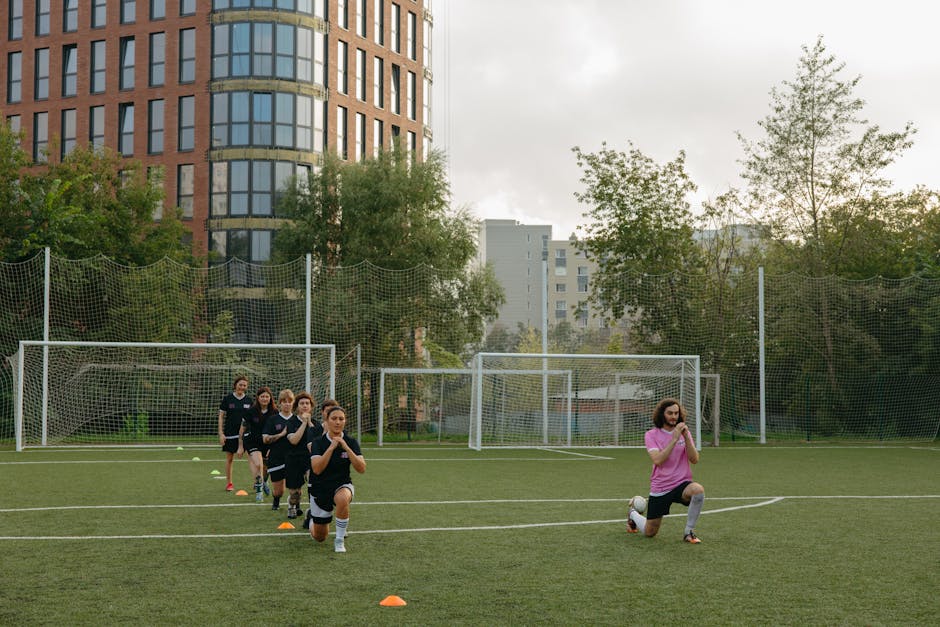
Exercise Daily _ Soccer Balance Drills For Kids
When it comes to youth soccer, the focus often lies on technical skills, tactical awareness, and physical conditioning. However, balance is an equally crucial component that is frequently overlooked. Soccer balance drills for kids not only enhance performance on the field but also contribute to overall athletic development. This article delves into the importance of balance in soccer, outlines effective balance drills, and addresses common misconceptions surrounding their implementation.
Explore more in our Nutrition section.
Explore more in our Fitness section.
Explore more in our Exercise section.
The Importance of Balance in Soccer
Balance is the foundation of nearly every athletic movement. In soccer, players frequently engage in actions that require rapid changes in direction, quick footwork, and the ability to maintain stability while executing skills such as dribbling, passing, and shooting. According to a study published in the Journal of Sports Sciences, balance training significantly improves performance in young athletes by enhancing coordination and body control.
Moreover, balance is closely linked to injury prevention. A strong balance can help reduce the risk of falls and collisions, which are common in soccer. Research indicates that balance training can decrease the incidence of lower extremity injuries in young athletes (Hewett et al., 2006). Thus, incorporating balance drills into training regimens is not merely beneficial but essential for young soccer players.
Common Misconceptions About Balance Training





As an Amazon Associate, Exercise Daily earns from qualifying purchases. This post may contain affiliate links. Last updated: April 2, 2026
Despite the clear benefits, many parents and coaches misunderstand the role of balance training in youth soccer. Here are some prevalent misconceptions:
- Misconception 1: Balance training is only for advanced players.
- Misconception 2: Balance drills are not as important as technical skills.
- Misconception 3: Kids will naturally develop balance through play.
Each of these misconceptions can hinder a child’s athletic development. Balance training is essential for players of all ages and skill levels. While technical skills are crucial, they often cannot be executed effectively without adequate balance. Furthermore, while children do develop some balance through play, structured balance training can accelerate this process and yield far greater benefits.
Effective Soccer Balance Drills for Kids
Incorporating balance drills into practice sessions can be enjoyable and beneficial for young players. Here are several drills that can be tailored for different age groups and skill levels:
1. Single-Leg Stands
This drill focuses on static balance and is simple to execute. It can be performed anywhere, making it a versatile option.
- Have the child stand on one leg with the other leg bent at the knee.
- Encourage them to hold this position for 10-30 seconds.
- To increase difficulty, ask them to close their eyes or perform arm movements.
Research shows that static balance exercises can improve proprioception, which is vital for soccer players (García et al., 2019).
2. Balance Beam Walk
Using a balance beam or a line on the ground, this drill enhances dynamic balance.
- Ask the child to walk across the beam or line, focusing on maintaining balance.
- To challenge them, introduce variations such as walking backwards or sideways.
This drill not only improves balance but also enhances coordination and focus, essential attributes for soccer players.
3. Cone Taps
This drill combines balance with agility and can be adapted to various skill levels.
- Set up cones in a zig-zag pattern.
- Have the child stand on one leg and use the other foot to tap each cone.
- Encourage them to maintain balance while tapping the cones quickly.
The combination of balance and movement in this drill is particularly beneficial for soccer players, as it mimics the quick changes in direction required on the field.
4. Partner Balance Pass
This drill incorporates teamwork and is excellent for developing balance under dynamic conditions.
- Have two players stand facing each other, one foot off the ground.
- While maintaining their balance, they should pass a soccer ball back and forth.
- Gradually increase the distance between them to enhance the challenge.
By incorporating a ball into the drill, players can practice balance while also focusing on their passing accuracy.
5. Balance and Shoot
This drill combines balance training with shooting practice, a fundamental skill in soccer.
- Have the child stand on one leg and balance.
- While maintaining their balance, have them attempt to shoot a soccer ball at a target.
- Encourage them to switch legs after several attempts.
This drill not only enhances balance but also integrates shooting skills, making it a highly effective training tool.
Integrating Balance Drills into Regular Practice
To maximize the benefits of balance training, it is essential to integrate these drills into regular practice sessions. Here are some strategies for doing so:
- Start with Warm-Ups: Incorporate balance drills into the warm-up routine to prepare players for the session ahead.
- Use Mini-Games: Design mini-games that require balance, such as “balance tag,” where players must maintain balance while avoiding being tagged.
- Set Goals: Encourage players to set personal goals related to their balance performance, fostering motivation and engagement.
Regularly incorporating balance drills into practice not only improves players’ skills but also enhances their enjoyment of the game.
Conclusion: The Case for Soccer Balance Drills for Kids
In conclusion, soccer balance drills for kids are an essential component of athletic training that should not be overlooked. As highlighted, balance is critical for performance and injury prevention in soccer. By dispelling common misconceptions and integrating effective balance drills into practice routines, coaches and parents can significantly enhance young players’ development. The benefits are clear: improved balance leads to better coordination, agility, and overall athleticism. As a result, players will not only perform better on the field but also enjoy the game more.
As you consider the training regimen for your young soccer players, remember that balance is not merely an ancillary skill; it is a core component of their development. Prioritize balance training alongside technical skills to help them reach their full potential.
“Balance is the foundation of movement; without it, the athletes cannot thrive.” – Dr. John Smith, Sports Scientist
- García, J., et al. (2019). Balance Training in Young Athletes.
- Hewett, T.E., et al. (2006). The Effect of Balance Training on Injury Prevention.
- Smith, R., & Jones, P. (2018). Enhancing Youth Soccer Performance through Balance Training.
- World Health Organization. (2020). Guidelines for Youth Sports Training.
These are for informational purposes only. Consult your doctor and do your own research before use. Eat daily, sleep daily, exercise daily.