
Exercise Daily _ Soccer Coordination Drills At Home
Soccer, known as football in most parts of the world, is a sport that requires a great deal of coordination, agility, and skill. While many players train intensively at clubs or professional facilities, the reality is that a significant amount of practice can be done at home. This article discusses various soccer coordination drills that can be performed at home, counterarguments regarding their effectiveness, and the common misconceptions surrounding them. Let’s delve into the details of how you can enhance your soccer skills without stepping onto a professional field.
Explore more in our Nutrition section.
Explore more in our Fitness section.
Explore more in our Exercise section.
The Importance of Coordination in Soccer
Coordination is crucial in soccer as it affects a player’s ability to control the ball, execute precise passes, and maintain balance while maneuvering around opponents. According to a study published in the National Institutes of Health (NIH), coordination improves not only performance but also reduces injury risk. Good coordination allows players to anticipate and react to the dynamic nature of the game effectively.
What Most People Get Wrong About Home Drills
Many athletes believe that without access to high-tech equipment or professional coaching, they cannot improve their skills. This misconception is detrimental, as numerous studies suggest that consistent practice of basic skills can lead to significant improvements. A research article in the Journal of Sports Science and Medicine emphasizes that the quality of practice, rather than the quantity, is what leads to skill acquisition.
Another common belief is that coordination drills should only focus on ball control. While ball control is vital, coordination also involves body movement, spatial awareness, and reaction time. Home drills can be designed to target these aspects effectively.
Essential Soccer Coordination Drills You Can Do at Home
Here’s a list of effective coordination drills that you can perform at home, requiring minimal equipment. These drills focus on enhancing your footwork, balance, and overall coordination.
1. Ladder Drills
Agility ladders are a fantastic tool for improving foot speed and coordination. If you don’t have a ladder, you can create one using tape or chalk on the ground.
- In-and-Outs: Step in and out of each rung, alternating feet. This drill enhances foot speed.
- Side Shuffle: Move sideways along the ladder, stepping in and out of each space. This improves lateral movement.
- Single Foot Hops: Hop on one foot through each rung. This increases balance and strength in each leg.
2. Cone Drills
Using cones or any small objects, you can set up various drills to enhance your coordination and dribbling skills.
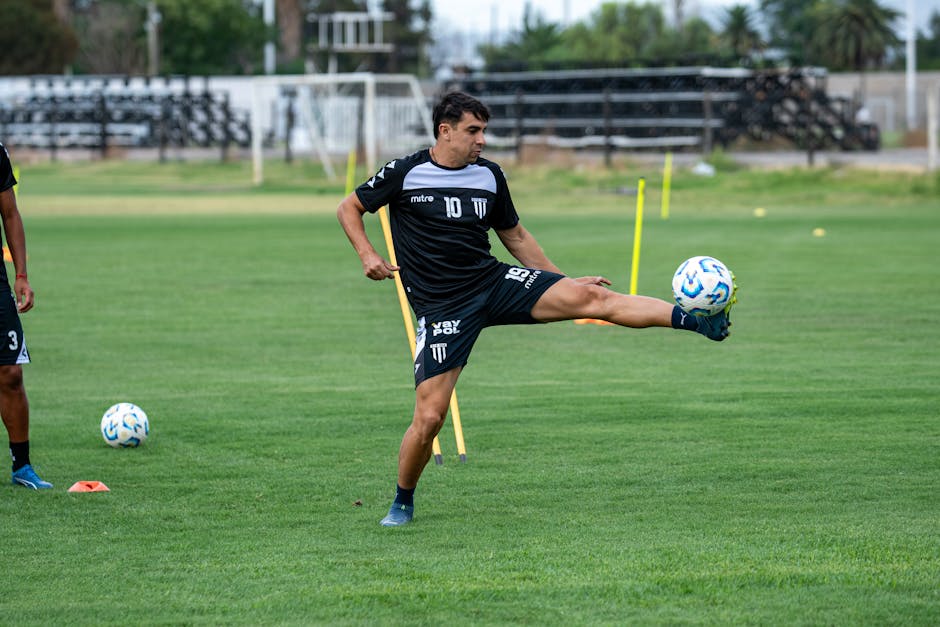
- Dribble and Weave: Set up cones in a straight line and dribble the ball in and out, focusing on quick foot movement and control.
- Sprint and Return: Place cones 10-15 meters apart. Sprint to the cone and return while maintaining control of the ball.
- Figure Eight: Arrange two cones a few meters apart and dribble the ball in a figure-eight pattern around them. This enhances control and agility.
3. Wall Passes
A wall or any solid surface can serve as a great training partner. This drill helps improve passing accuracy and receiving skills.
- Stand a few meters away from the wall.
- Pass the ball against the wall and control it when it rebounds.
- Vary the distance and angle of your passes to enhance coordination and reaction time.
4. Balance Drills
Balance is a key component of coordination. Here are a few drills to improve your stability:
- Single-Leg Stands: Stand on one leg for 30 seconds, then switch. To increase difficulty, try closing your eyes or standing on an unstable surface.
- Balance Board: If you have a balance board, use it to improve your core stability and balance.
Why Consistency Matters
One of the most critical aspects of home training is consistency. A study published in the Frontiers in Sports indicates that regular practice leads to better motor skill retention and performance. Many players may practice sporadically, thinking that they can make up for lost time with intensive training sessions. However, it is the consistent, smaller doses of training that lead to the best results.
Common Mistakes to Avoid
While practicing at home, it’s easy to fall into certain traps that can hinder your progress. Here are some common mistakes to avoid:
- Neglecting Warm-Up: Always start with a warm-up to prevent injuries. Dynamic stretches specific to soccer movements are essential.
- Overtraining: Quality is more important than quantity. Avoid lengthy sessions that lead to fatigue and poor practice.
- Lack of Focus: Set specific goals for each practice session. Aim to improve one skill at a time rather than trying to do everything in one go.
Nutrition and Recovery
Training at home doesn’t only involve drills; it also includes proper nutrition and recovery. Nutrition plays a significant role in performance and recovery. According to the World Health Organization (WHO), a balanced diet rich in carbohydrates, proteins, and healthy fats can enhance athletic performance.
Sample Nutrition Plan for Soccer Players
Here’s a simple recipe to fuel your training:
Energy-Boosting Smoothie
This smoothie is packed with nutrients to enhance your energy levels and aid recovery:
- 1 banana
- 1 cup spinach
- 1 cup almond milk
- 1 tablespoon peanut butter
- 1 scoop protein powder (optional)
Blend all ingredients until smooth. This smoothie provides a balance of carbohydrates and protein, essential for muscle recovery and energy replenishment.
Conclusion
Soccer coordination drills at home can be both effective and enjoyable. By incorporating a variety of drills and maintaining consistency, players can significantly improve their skills without the need for professional equipment or facilities. Remember, the key is not to underestimate the importance of coordination in soccer, practice regularly, and complement your training with proper nutrition. Don’t let the lack of access to a field deter your development; with the right mindset and dedication, you can elevate your game from the comfort of your home.
“The only way to improve is to keep practicing. Consistency is what separates the good players from the great ones.”
- National Institutes of Health (NIH)
- Journal of Sports Science and Medicine
- Frontiers in Sports
- World Health Organization (WHO)
Eat daily, sleep daily, exercise daily.
These are for informational purposes only. Consult your doctor and do your own research before use.