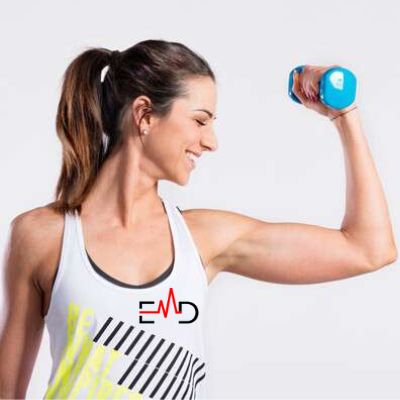
Dumbbell bicep exercises are a straightforward way to build arm strength because each arm works independently. The best results come from controlled repetitions, enough recovery, and a weight you can lower without swinging.
This guide focuses on practical movements for a general strength routine. If you feel sharp or persistent pain in the elbow, wrist, or shoulder, stop the movement and get individual advice.
How to choose a dumbbell weight
Choose a load that lets you complete the planned repetitions with steady posture and a full comfortable range of motion. For most people, 8–15 repetitions works well for accessory bicep training. The final few repetitions should feel challenging without turning into a body swing.
5 dumbbell bicep exercises
1. Standing supinating curl
Start with palms facing your thighs. Curl the dumbbells while rotating the palms upward, then lower slowly. Keep your ribs down and elbows close to your sides.
2. Incline dumbbell curl
Sit on a moderate incline bench and let the arms hang naturally. Curl without moving the shoulders forward. Use a lighter weight than you would for a standing curl.
3. Hammer curl
Keep palms facing each other throughout the movement. This variation trains the elbow flexors with a neutral grip and fits well after standard curls.
4. Concentration curl
Brace the upper arm against the inside of your thigh and curl one dumbbell at a time. Pause briefly at the top and lower for two to three seconds.
5. Cross-body hammer curl
Curl one dumbbell toward the opposite shoulder while keeping the torso still. Alternate sides or complete one side at a time.
Simple sets and reps plan
Pick two or three movements and perform 2–4 sets each. Start with 8–15 repetitions, resting 60–120 seconds between hard sets. Add repetitions first. Increase weight only when every rep stays smooth and controlled.
For a more targeted option, see our short head bicep dumbbell guide. You can also alternate dumbbells with our bicep band exercises.
Form mistakes that limit progress
- Leaning backward or driving the curl with the shoulders.
- Dropping the weight quickly instead of controlling the lowering phase.
- Adding weight before you can complete clean repetitions.
- Training biceps hard every day without recovery.
Bottom line
A small selection of controlled dumbbell bicep exercises is enough for steady progress. Train consistently, keep your technique honest, and make gradual changes rather than chasing a heavier weight every session.