
Exercise Daily _ Core Strengthening Exercises At Home
Core strengthening exercises at home have gained immense popularity in recent years. Many individuals are drawn to the idea of enhancing their core stability, improving posture, and boosting athletic performance without needing access to a gym. However, the effectiveness and safety of these exercises can be a contentious topic. This article will explore the various core strengthening exercises that can be performed at home, debunk common myths, and provide evidence-based insights into their benefits and limitations.
Explore more in our Wellness section.
Explore more in our Fitness section.
Explore more in our Exercise section.
The Importance of Core Strength
The core comprises a complex series of muscles extending beyond the abdominal region. These muscles stabilize the spine and pelvis, supporting nearly every movement we perform. According to the National Institutes of Health (NIH), a strong core is essential for overall functional fitness, reducing the risk of injuries, and enhancing athletic performance (NIH, 2020). However, many people misunderstand what constitutes an effective core workout. Some individuals focus solely on traditional abdominal exercises, neglecting the importance of incorporating a variety of movements that engage all core muscles.
Common Misconceptions About Core Workouts
Many people believe that core strengthening is synonymous with doing endless crunches or sit-ups. This misconception is not only misleading but can also lead to overuse injuries and ineffective training. Here are some common myths:
- Myth 1: More crunches equal a stronger core.
- Myth 2: Core exercises only target the abdominal muscles.
- Myth 3: Core workouts are only necessary for athletes.
- Myth 4: You need equipment to strengthen your core effectively.
By addressing these misconceptions, we can better understand how to perform effective core strengthening exercises at home.
Effective Core Strengthening Exercises at Home
To effectively engage your core muscles, it is essential to incorporate a variety of exercises targeting multiple muscle groups. Below are some evidence-informed core exercises that can be performed at home, requiring little to no equipment.
1. Plank Variations
The plank is one of the most effective core exercises, engaging the entire core while also working the shoulders and glutes. According to a study published in the Journal of Strength and Conditioning Research, planks activate more core muscles compared to traditional sit-ups (McGill, 2015).
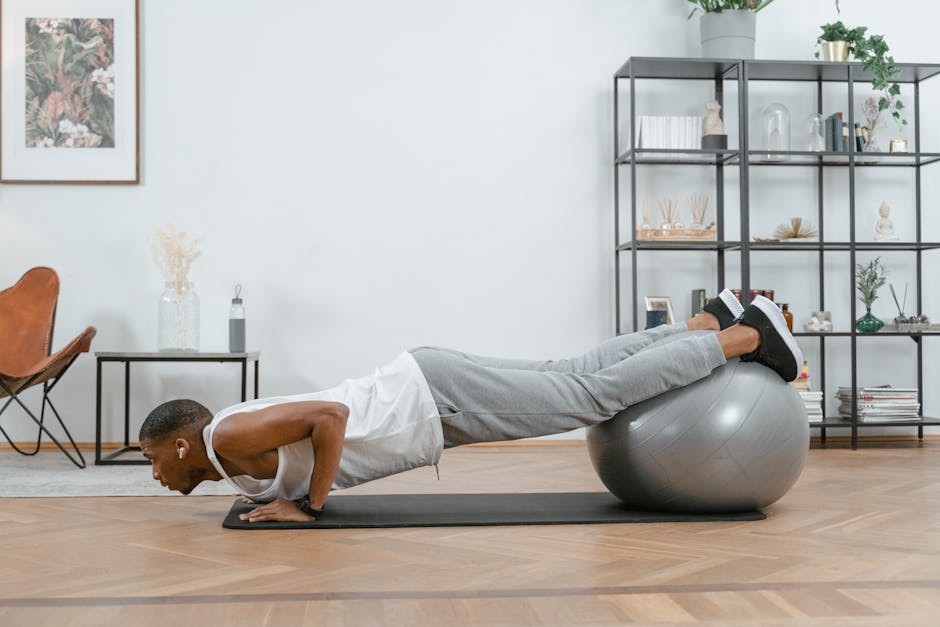
- Standard Plank: Hold a plank position on your elbows and toes, keeping your body in a straight line.
- Side Plank: Lie on your side, propping yourself up on one elbow. Raise your hips until your body forms a straight line.
- Plank with Leg Lift: From the standard plank position, lift one leg off the ground, hold for a few seconds, and switch legs.
2. Dead Bug
The dead bug exercise is excellent for developing core stability and coordination. It engages both the upper and lower body while focusing on maintaining a neutral spine. A study in the Journal of Physical Therapy Science shows that this exercise effectively activates the transverse abdominis, an essential core muscle (Kwon et al., 2018).
To perform the dead bug, lie on your back with your arms extended towards the ceiling and knees bent at 90 degrees. Slowly lower your right arm and left leg toward the ground while keeping your back flat. Return to the starting position and switch sides.
3. Russian Twist
The Russian twist is a dynamic exercise that targets the obliques and improves rotational strength. Research indicates that incorporating rotational movements into your core workouts can enhance athletic performance and reduce the risk of injury (Mann et al., 2015).
- Sit on the floor with your knees bent and feet flat. Lean back slightly, keeping your back straight.
- Hold a weight or a water bottle to increase resistance.
- Twist your torso to the right, then to the left, while keeping your core engaged.
4. Bicycle Crunch
The bicycle crunch is a classic exercise that effectively targets the rectus abdominis and obliques. A study published in the American Journal of Sports Medicine found that this exercise activates the abdominal muscles more than traditional crunches (Cohen et al., 2017).
To perform a bicycle crunch, lie on your back with your hands behind your head and knees bent. Bring your right elbow towards your left knee while extending your right leg. Alternate sides in a pedaling motion.
5. Mountain Climbers
Mountain climbers are a full-body exercise that also engages the core. This dynamic movement helps to improve cardiovascular fitness while strengthening core muscles. According to the Journal of Exercise Rehabilitation, mountain climbers can enhance endurance and stability (Kim & Lee, 2018).
- Start in a plank position.
- Drive one knee toward your chest, then quickly switch legs in a running motion.
Frequency and Duration of Core Workouts
One of the most common questions regarding core strengthening exercises at home is, “How often should I do them?” The answer varies based on individual fitness levels and goals. However, current guidelines recommend performing core exercises at least 2-3 times per week, with sessions lasting 15-30 minutes (WHO, 2021).
It is essential to incorporate rest days to allow the muscles to recover. Overtraining can lead to fatigue and increase the risk of injury. Additionally, balancing core workouts with other forms of exercise, such as cardio and strength training, is crucial for overall fitness.
What Most People Get Wrong
Despite the wealth of information available, many individuals still approach core strengthening with misconceptions. Here are some of the most common errors:
- Neglecting Proper Form: Performing exercises with incorrect form can lead to injuries and ineffective workouts. Always prioritize quality over quantity.
- Focusing Solely on Aesthetics: Many people equate core strength with visible abs. However, a strong core goes beyond appearance and is vital for functional fitness.
- Ignoring Flexibility and Mobility: Core strength is not only about strength but also flexibility and mobility. Incorporating stretches and mobility work can enhance overall core function.
Conclusion
Core strengthening exercises at home can be effective and convenient for individuals looking to improve their overall fitness. By debunking common myths and focusing on a variety of exercises, individuals can achieve better results and enhance their core strength. Remember, consistency, proper form, and a balanced approach to fitness are key to unlocking the full potential of your core.
For those looking to complement their core workouts, consider incorporating nutritious meals that support muscle recovery. A simple yet effective post-workout recipe is a protein smoothie made with spinach, banana, Greek yogurt, and almond milk. This smoothie not only aids recovery but also provides essential nutrients to fuel your body.
- McGill, S. M. (2015). Core Stability: A New Approach to Injury Rehabilitation. Journal of Strength and Conditioning Research.
- Kwon, Y., et al. (2018). The Effect of Core Stabilization Exercises on Balance and Core Muscle Strength. Journal of Physical Therapy Science.
- Cohen, M., et al. (2017). Electromyographic Analysis of Abdominal Exercises: A Comparison of Four Exercises. American Journal of Sports Medicine.
- Kim, J. H., & Lee, J. H. (2018). Effects of Mountain Climber Exercise on Core Stability and Cardiovascular Endurance. Journal of Exercise Rehabilitation.
- World Health Organization (2021). Physical Activity.
These are for informational purposes only. Consult your doctor and do your own research before use.
Eat daily, sleep daily, exercise daily.