The Battle Rope Debate: Fitness Trend or Overhyped Fad?
Battle ropes have stormed the fitness world, hailed as the ultimate tool for combining strength, cardio, and explosive power in one sweaty session. Yet, skeptics argue that their benefits are overstated and that battle ropes might just be another fad in a sea of flashy fitness gadgets. Before you slam the ropes down or throw them into the bargain bin, let’s dissect the controversy thoroughly. Are battle ropes genuinely worth your time, money, and effort? Or are they just glorified jump ropes posing as a solution to all workout woes? This article dives deep into what battle ropes really offer, who should use them, their benefits and limitations, and how to avoid common pitfalls. The goal? To help you decide if the battle rope deserves a permanent spot in your exercise arsenal.
What Is a Battle Rope and Who Is It For?
A battle rope is essentially a heavy, thick rope usually made of polyester or manila hemp, ranging between 30 and 50 feet in length and about 1.5 to 2 inches in diameter. The core concept involves anchoring one end to a stationary object and performing dynamic, rhythmic, or explosive movements—waves, slams, spirals—to engage multiple muscle groups simultaneously.
Battle ropes are marketed to a surprisingly broad demographic:
- Gym-Goers and Athletes: Looking for intense, full-body conditioning and power development.
- Home Workout Enthusiasts: Wanting a compact, versatile tool that combines strength and cardio in limited space.
- Recovery-Focused Users: Those using lighter, controlled movements with battle ropes to maintain mobility or rebuild shoulder stability.
But, practically speaking, battle ropes require a baseline level of strength, coordination, and space that not everyone has or needs. They are not universally ideal, especially for complete beginners or those with certain injuries.
Benefits and Limitations of Battle Ropes
Benefits
- Cardiovascular and Muscular Conditioning: Battle ropes uniquely bridge the gap between anaerobic strength and aerobic endurance. Fast-paced waves spike heart rate while engaging arms, shoulders, core, and even legs for stabilization.
- Versatility: Numerous movement patterns allow targeting different muscle groups and training goals: slams for power, waves for endurance, spirals for rotational strength.
- Low Impact on Joints: Unlike running or jumping, rope exercises are easier on knees and hips while still delivering a tough workout.
- Improved Grip and Shoulder Stability: Holding and controlling thick ropes enhances forearm strength and joint stability, important for athletes in combat sports or overhead activities.
- Time Efficient: High-intensity intervals with battle ropes can deliver a robust workout in 10-15 minutes, appealing for busy lifestyles.
Limitations
- Space Requirement: You need a wide, open area to swing ropes freely without hazards or interruptions.
- Technical Learning Curve: Poor form can reduce effectiveness and risk injury, especially if users overextend shoulders or lack core engagement.
- Not Ideal for Absolute Beginners: Insufficient baseline strength or mobility can lead to frustration or tendon strain.
- Limited Lower Body Engagement: Unless combined with squats or lunges, battle ropes don’t significantly work leg musculature compared to barbell or kettlebell exercises.
- Overuse Risk: Repetitive high-volume use without adequate recovery can contribute to shoulder or elbow irritations.
Featured Product: Battle Rope
ASIN: B072Z2ZTLJ
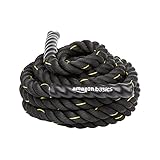
- PREMIUM CONSTRUCTION: Made with 100% Poly Dacron material featuring durable 3-strand twisted design for long-lasting performance
- PROTECTIVE FEATURES: Includes 600D Oxford waterproof sleeve and heat-shrink end caps to prevent fraying and extend rope life
- ENHANCED VISIBILITY: Orange/yellow tracking line for easy maintenance and safety during workouts
- VERSATILE FITNESS TOOL: Perfect for strength training, cardio workouts, CrossFit, and full-body conditioning exercises
- SPECIFICATIONS: 1.5-inch diameter x 30-foot length battle rope; clockwise twist construction for optimal performance

As an Amazon Associate, Exercise Daily earns from qualifying purchases. This post may contain affiliate links. Last updated: October 22, 2026
Pros and Cons of Battle Ropes
Pros
- Combines cardio and muscular endurance training effectively
- Versatile exercises to target different fitness goals and muscle groups
- Compact and portable option for home workouts
- Low-impact, reducing joint stress compared to running or jumping
- Builds grip strength and shoulder stability
Cons
- Requires sufficient space and proper anchoring
- Learning proper technique can be challenging
- Not ideal for beginners or those with preexisting shoulder injuries
- Limited to upper-body dominant movement unless paired with other exercises
- Potential for overuse injuries if not programmed wisely
Buyer Checklist: What to Look for When Buying Battle Ropes
- Length and Diameter: Standard lengths are 30, 40, or 50 feet. Longer ropes increase endurance demands but require more space. Diameter ranges from 1.5 to 2 inches; thicker ropes increase grip and upper body challenge.
- Material Quality: Polyester ropes are durable, water-resistant, and better for indoor/outdoor use. Manila ropes have a natural look but wear faster and can cause splinters.
- Weight: Heavier ropes provide more resistance but can be tough if you’re a beginner. Consider weight relative to your strength level.
- Anchor Options: Check if the rope includes a secure anchor, or if you need to purchase separately. Anchoring can be to a door, post, or wall mount—make sure your space accommodates this safely.
- Grip Enhancements: Some ropes come with rubber grips or sleeves to protect hands and extend rope life.
- Packaging and Storage: Consider if you want a kit that includes a bag or straps for convenience.
- Customer Reviews: Look for feedback on durability, comfort, and overall satisfaction to gauge real-world use.
- Price Versus Quality: Avoid the cheapest ropes that fray quickly, but premium price doesn’t always guarantee durability—balance cost and quality performance.
For an example of a trusted rope option, see this battle rope available on Amazon.
Common Mistakes to Avoid When Using Battle Ropes
- Using Poor Form: Slouching, rounded shoulders, or lack of core bracing puts undue strain on joints and reduces effectiveness.
- Overtraining: Performing battle rope workouts daily or for extended periods without rest can lead to tendonitis or shoulder pain.
- Ignoring Lower Body Engagement: Standing still or locking knees reduces total body calorie burn and stability benefits.
- Starting with Excessive Rope Weight or Length: Beginners should start lighter and shorter to master movements before progressing.
- Neglecting Warm-Up and Mobility Work: Skipping shoulder and wrist warm-ups before intense rope sessions increases injury risk.
Safety Tips and Who Should NOT Use or Buy Battle Ropes
- Proper Warm-Up: Start with dynamic shoulder circles, wrist rotations, and light cardio to prepare joints.
- Consult With a Professional: Athletes with existing shoulder, elbow, or wrist injuries should get clearance before starting.
- Choose the Right Rope: Avoid ropes too heavy or too long for your fitness and space.
- Modify or Avoid if: You have rotator cuff tears, severe arthritis, or recent upper body surgery.
- Use Protective Gear: Gloves or grip holders can prevent blisters if training long or intensely.
- Monitor Pain Signals: Sharp or persistent pain is a sign to stop and assess the cause.
Alternatives or Complementary Recovery Habits
While battle ropes excel for high-intensity conditioning and upper body power, incorporating alternative or complementary methods improves overall fitness and reduces injury risks:
- Kettlebell Swings and Deadlifts: For comprehensive lower body and posterior chain strength.
- Jump Rope: Enhances coordination and cardiovascular conditioning with lower impact and less space.
- Resistance Bands: Useful for targeted mobility, activation, and injury rehab routines.
- Yoga and Mobility Work: Enhances flexibility and joint health to support battle rope performance.
- Massage and Foam Rolling: Promote muscle recovery after intense battle rope sessions, linking naturally to recovery resources.
- Proper Nutrition and Hydration: Support energy and repair from high-intensity training, see our nutrition insights.
Related Exercise Daily Resources
- Exercise Techniques and Routines – Learn foundational workouts to complement ropes.
- Fitness Programming Tips – Build balanced regimens incorporating ropes.
- Nutrition Strategies – Optimize fuel for intense training.
- Wellness and Recovery – Support joint health and prevent overtraining.
- Natural Remedies for Soreness – Reduce inflammation and speed recovery after rope workouts.
FAQ About Battle Ropes
- Q: How long should a typical battle rope workout last?
A: Most effective sessions run between 10 and 20 minutes in intervals, balancing work and rest to avoid overuse. - Q: Can beginners use battle ropes safely?
A: Yes, but it’s critical to start with lighter ropes, shorter lengths, and focus on mastering technique before high intensity. - Q: Do battle ropes really build muscle?
A: They improve muscular endurance and power, especially in upper body, but are less effective for hypertrophy compared to traditional weight training. - Q: Are battle ropes good for weight loss?
A: Yes, due to the cardio and strength combo, they can support fat loss when combined with proper nutrition and overall exercise. - Q: Can I use battle ropes outdoors?
A: Absolutely, just ensure the rope and anchor can withstand outdoor conditions, and choose a flat, safe surface. - Q: How often should I rest between battle rope sessions?
A: At least 24-48 hours rest to allow muscles and tendons to recover, especially when training at high intensity. - Q: What are the signs I’m using battle ropes incorrectly?
A: Persistent joint pain, excessive fatigue, compensatory movements (like shrugging shoulders), or lack of workout progression are warning signs.
Final Verdict
Battle ropes offer a unique training modality that blends cardiovascular conditioning with muscular endurance and shoulder stability development. For gym-goers aged 20-34, athletes, and home workout enthusiasts, they can be a dynamic and time-efficient addition to your fitness toolkit—provided you choose the right rope, master the technique, and respect recovery needs.
However, battle ropes are not a magic bullet. They have limitations, including space requirements and potential injury risks if misused. They shouldn’t replace foundational strength training or aerobic programs but can enhance them when applied intelligently.
Ultimately, whether battle ropes deserve their hype depends on your goals, physical condition, and commitment to proper form and recovery protocols. If you’re armed with knowledge, realistic expectations, and a smart approach, the battle rope can be an energizing and effective part of your fitness journey.
Evidence and References
Peer-reviewed research and trusted sources support that battle ropes effectively increase cardiovascular fitness and muscular endurance. Studies published in journals aligned with ACSM and NIH consistently highlight the dual aerobic-anaerobic benefits. Additionally, Frontiers in Physiology discuss improved grip strength and shoulder stabilization from rope training. However, evidence also warns about potential overuse injuries if appropriate technique and recovery are neglected. Following guidelines from organizations such as CDC and ACSM ensures safer and more effective use of battle ropes within comprehensive fitness programs.
Exercise Daily Editorial Note
Exercise Daily is dedicated to helping readers make informed decisions about exercise, fitness, nutrition, wellness, recovery, natural remedies, weight management, sports performance, and healthy living.
Exercise Daily Media Lab — an independent media lab for health, fitness, and practical AI.
Our mission is to make health, fitness, and technology topics easier to explore, and help brands and professionals share their work through clearly scoped media projects.
Explore More on Exercise Daily
These are for informational purposes only. Consult your doctor and do your own research before use.
Eat daily, sleep daily, exercise daily.