Exercise Daily _ Home Soccer Conditioning Workouts For Beginners
Many people mistakenly believe that soccer conditioning can only be effectively achieved on the field or in high-end gyms. This myth leads countless beginners to overlook the immense potential of home workouts, which can provide equally effective conditioning. In reality, with the right approach, you can develop agility, endurance, and strength right from your living room. It’s time to debunk the notion that you need specialized facilities or equipment to kickstart your soccer training journey.
Who This Is For
- Beginners looking to improve their soccer skills without prior experience.
- Busy adults seeking efficient workouts that fit into their schedules.
- Parents who want to engage their children in a fun, physical activity at home.
- Individuals who may be overweight and are looking for a manageable entry point into fitness.
- Recovering athletes wanting to maintain fitness levels while rehabilitating.
Understanding the Fundamentals of Soccer Conditioning




As an Amazon Associate, Exercise Daily earns from qualifying purchases. This post may contain affiliate links. Last updated: September 21, 2026
Soccer conditioning focuses on developing specific attributes essential for the sport, such as cardiovascular endurance, explosive strength, and agility. For beginners, it is crucial to understand that conditioning does not solely rely on running laps or doing endless sprints. Instead, it involves a combination of various exercises that mimic the movements performed during a soccer match. This holistic approach ensures that you build a well-rounded fitness base that translates directly into improved performance on the field.
To break it down further, soccer requires a unique blend of physical capabilities. Players must be able to sprint, jump, and change direction quickly, all while maintaining their stamina over the course of a match. Therefore, conditioning should encompass exercises that develop these specific physical qualities. For instance, agility is not just about speed; it’s about being able to control your body while moving quickly, which is why agility drills are a key component of any conditioning program.
Explore more in our Exercise section.
What Most People Get Wrong
One of the biggest misconceptions about soccer conditioning is that it requires extensive running drills or access to specialized equipment. Many beginners make the mistake of believing that they need to follow a regimented training program that solely focuses on cardiovascular fitness. While aerobic conditioning is important, neglecting strength training and agility work can lead to imbalances and prevent optimal performance.
Another common error is the tendency to skip warm-ups and cool-downs. Ignoring these essential components can increase the risk of injury and hinder recovery. A proper warm-up prepares your muscles and joints for the workout ahead, while a cool-down aids in recovery and flexibility, both vital for any athlete. The importance of these phases cannot be overstated, as they set the foundation for a successful workout and aid in long-term athletic development.
Home Soccer Conditioning Workouts for Beginners
Below are some effective conditioning workouts specifically designed for beginners. These workouts can be done at home, require minimal equipment, and focus on improving your soccer-specific fitness.
Explore more in our Fitness section.
1. Warm-Up Routine
Start every workout with a warm-up to prepare your body. Spend 10-15 minutes on the following:
- Dynamic stretches (leg swings, arm circles) to increase blood flow and flexibility.
- High knees (30 seconds) to elevate your heart rate and engage your core.
- Butt kicks (30 seconds) to activate your hamstrings and improve coordination.
- Side shuffles (30 seconds each direction) to enhance lateral movement and agility.
Incorporating these dynamic movements not only prepares your muscles for the workout but also helps to mentally focus on the task at hand. This phase is crucial for injury prevention and sets the tone for an effective session.
2. Agility Drills
Agility is crucial in soccer for quick changes in direction. Here are two effective drills:
Explore more in our Nutrition section.
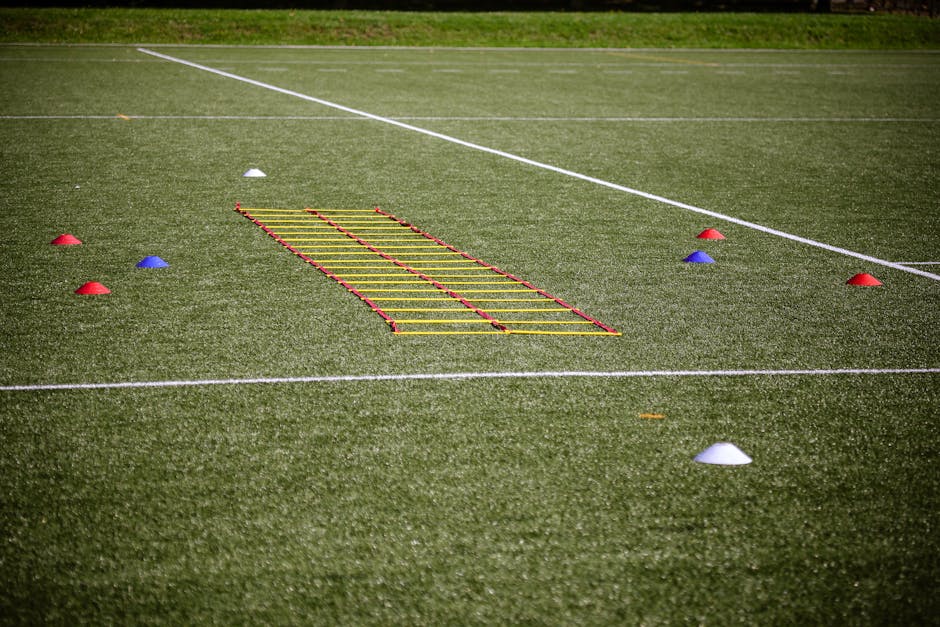
- Ladder Drills: Use a jump rope or imaginary ladder. Perform various footwork patterns for 10 minutes, such as the in-and-out, lateral shuffles, and single-leg hops. These drills enhance your foot speed and coordination, both essential for navigating the soccer field.
- Cone Drills: Set up three cones in a straight line, spaced about 5-10 feet apart. Sprint to the first cone, touch it, and return to the starting point. Repeat for each cone, focusing on speed and control. You can also incorporate lateral movements by shuffling between cones or performing figure-eight patterns to further challenge your agility and change of direction.
3. Strength Training
Building strength is vital for soccer players. Incorporate these bodyweight exercises into your routine:
- Squats: 3 sets of 10-15 reps. Focus on maintaining proper form with feet shoulder-width apart and back straight to engage your glutes and quadriceps effectively.
- Push-ups: 3 sets of 8-12 reps. Modify by doing them on your knees if necessary, ensuring your body forms a straight line from head to knees or toes.
- Plank: Hold for 20-30 seconds, 3 times. Engage your core, glutes, and shoulders to maintain stability in this position.
- Burpees: 3 sets of 5-10 reps. This full-body exercise combines strength and cardio, making it an excellent addition to your routine.
These exercises promote functional strength, which is critical for performing well in soccer. As you progress, consider adding variations or increasing the intensity to continue challenging your muscles and enhancing your overall strength.
4. Endurance Training
For cardiovascular endurance, perform interval training. Alternate between high-intensity bursts and rest:
- 30 seconds of sprinting in place, followed by 30 seconds of walking. Repeat for 15-20 minutes. This method not only boosts your aerobic capacity but also simulates the stop-and-start nature of soccer, helping to prepare you for match conditions.
As you build endurance, consider gradually increasing the duration of the high-intensity intervals or reducing the rest periods to further challenge your cardiovascular system and enhance your stamina.
5. Cool Down
Finish every workout with a cool-down to aid recovery. Spend 5-10 minutes on:
- Static stretches focusing on major muscle groups (hamstrings, quadriceps, calves) to improve flexibility and decrease muscle soreness.
- Deep breathing exercises to relax your body and mind. This can also help lower your heart rate gradually and promote a sense of calm.
Cooling down is often overlooked, but it plays a crucial role in recovery. By taking the time to properly stretch and breathe, you can enhance your flexibility and reduce the risk of injury, setting you up for a successful next workout.
Why This Actually Works
The effectiveness of these home workouts lies in their ability to mimic the physical demands of soccer. Research shows that a combination of strength, agility, and endurance training enhances athletic performance (Hoff, J., & Helgerud, J., 2004). By integrating these elements into your routine, you develop a fitness level that not only prepares you for the game but also helps prevent injuries.
Additionally, home workouts provide flexibility and accessibility, allowing you to train consistently without the barriers of travel or gym hours. This consistency is key for beginners who need to build a strong foundation over time. The ability to exercise in your own space can also lead to a more relaxed and enjoyable experience, encouraging you to stick with your fitness journey.
Moreover, engaging in varied workouts keeps the training enjoyable and prevents burnout, a common issue for those new to fitness. A study published in the Journal of Sports Sciences suggests that enjoyment and variety in training are significant predictors of adherence to an exercise program (Scully, D., et al., 1998). By mixing up your routine with different exercises and drills, you not only keep your workouts fresh but also challenge your body in new ways, promoting overall fitness and performance improvements.
Frequently Asked Questions
1. How often should I train at home for soccer conditioning?
For beginners, aim for 3-4 times a week. This frequency allows for sufficient recovery while promoting consistent improvement. It’s important to listen to your body and adjust your training schedule as needed to avoid overtraining.
2. Do I need any special equipment for these workouts?
No special equipment is necessary. Most exercises can be performed using just your body weight. However, a jump rope and a few cones can enhance your agility training. If you have access to resistance bands or dumbbells, consider incorporating them for added strength training benefits.
3. Can these workouts help me improve my soccer performance?
Absolutely! These workouts target essential fitness components that directly translate to better performance on the field, including speed, strength, and endurance. By dedicating time to these conditioning workouts, you will notice improvements in your ability to sprint, maintain stamina, and execute skills more effectively during matches.
Conclusion
Home soccer conditioning workouts for beginners are an accessible and effective way to enhance your fitness and soccer skills. By focusing on agility, strength, and endurance, you can prepare yourself for the demands of the game without needing a gym. Remember, the key is consistency and variety, allowing you to enjoy the process while making tangible improvements. Embrace this opportunity to train effectively at home and watch your soccer performance soar.
- Hoff, J., & Helgerud, J. (2004). Endurance and strength training for soccer players. Journal of Sports Sciences.
- Scully, D., et al. (1998). Physical exercise and psychological well-being: a critical review. Journal of Sports Sciences.
- World Health Organization. (2020). Physical activity.
- Schoenfeld, B. J. (2010). Squatting kinematics and kinetics and their application to exercise performance. Journal of Strength and Conditioning Research.
Eat daily, sleep daily, exercise daily.