Top 5 This Week

Related Posts

Best Resistance Band Exercises For Beginners | Exercise Daily

Best Resistance Band Exercises For Beginners | Exercise Daily

Think resistance bands are only for seasoned gym-goers? Think again! These versatile tools are perfect for beginners looking to build strength, improve flexibility, and enhance their overall fitness level. Many people mistakenly believe that investing in expensive gym equipment is the only way to achieve their fitness goals. In reality, resistance band exercises for beginners can provide a comprehensive workout that targets multiple muscle groups without breaking the bank or taking up much space. In this article, we will explore the best resistance band exercises, tips for beginners, and common mistakes to avoid. For more help, see our exercise training guides.

Who This Is For

  • Beginners who are new to strength training and want a safe way to start.
  • Athletes looking to incorporate resistance bands into their training regimen for added variety.
  • Busy adults seeking efficient workouts that can be done at home or while traveling.
  • Parents wanting to fit in quick workouts without needing a gym membership.
  • Individuals recovering from injuries who need low-impact strength training options.

What Most People Get Wrong

One of the biggest misconceptions about resistance bands is that they don’t provide enough resistance to be effective. Many beginners assume that only heavy weights can lead to muscle growth and strength gains. However, resistance bands can offer a significant challenge when used correctly. The key lies in choosing the right band and adjusting the tension during exercises. It’s important to understand that muscle growth and strength development come not just from the weight lifted but also from the tension applied during the workout. For more help, see our exercise training guides.

Moreover, it’s crucial to recognize that resistance bands can enhance both strength training and flexibility work. By incorporating resistance bands into your routine, you can perform exercises that not only build muscle but also improve your range of motion and flexibility. This dual benefit is particularly advantageous for beginners, as it lays a solid foundation for future fitness endeavors. For more help, see our exercise training guides.

Why This Actually Works

Resistance bands work by creating tension in your muscles throughout the entire range of motion. This constant tension can lead to better muscle engagement compared to traditional weights. According to a study published in the Journal of Strength and Conditioning Research, resistance bands can be just as effective as free weights for building strength and muscle mass. Additionally, they are versatile, portable, and can easily be used for a variety of exercises targeting different muscle groups.

Resistance bands also provide unique benefits that free weights cannot offer. For instance, they allow for variable resistance, meaning the resistance increases as you stretch the band further. This characteristic helps to mimic the natural biomechanics of the body during various movements, making exercises more effective. Furthermore, resistance bands can improve your stability and coordination by forcing your muscles to engage more actively to control the movement.

Mistakes to Avoid

  • Using the Wrong Band: Beginners often choose bands that are too light or too heavy. Start with a lighter band and gradually increase resistance as you gain strength. Understanding the resistance levels of different bands is essential. Bands usually come in color-coded systems, indicating varying resistance levels. Familiarize yourself with these to select the appropriate band for your current fitness level.
  • Improper Form: Focusing on form is crucial. Poor technique can lead to injuries and reduced effectiveness. Take the time to learn the correct posture and movement patterns. Consider watching instructional videos or consulting a fitness professional to ensure you’re performing exercises correctly.
  • Neglecting Warm-Up: Skipping warm-up exercises can increase the risk of injury. Always begin with dynamic stretches to prepare your muscles. A proper warm-up increases blood flow to the muscles, enhances flexibility, and prepares your body for more strenuous activity, reducing the likelihood of strains or sprains.
  • Ignoring Progression: To continue seeing results, it’s essential to increase the difficulty of your workouts over time, whether by changing the band, increasing reps, or adjusting the exercise. This principle, known as progressive overload, is fundamental to any fitness routine. Regularly challenge yourself to avoid plateaus in strength and fitness gains.

Best Resistance Band Exercises for Beginners

Here’s a curated list of effective resistance band exercises that are perfect for beginners. Each exercise targets specific muscle groups and is designed to help you build strength safely. These exercises can be performed at home, in a park, or even while traveling. They require minimal space and equipment, making them highly accessible.

Exercise Target Muscle Sets Reps Difficulty Safety Cue
Squats Legs, Glutes 3 10-15 Easy Keep knees behind toes
Chest Press Chest, Shoulders 3 10-12 Easy Engage core, avoid arching back
Seated Row Back, Biceps 3 10-12 Medium Maintain a straight back
Shoulder Press Shoulders, Triceps 3 10-12 Medium Avoid shrugging shoulders
Glute Bridge Glutes, Hamstrings 3 12-15 Easy Keep feet flat, squeeze glutes

1. Squats

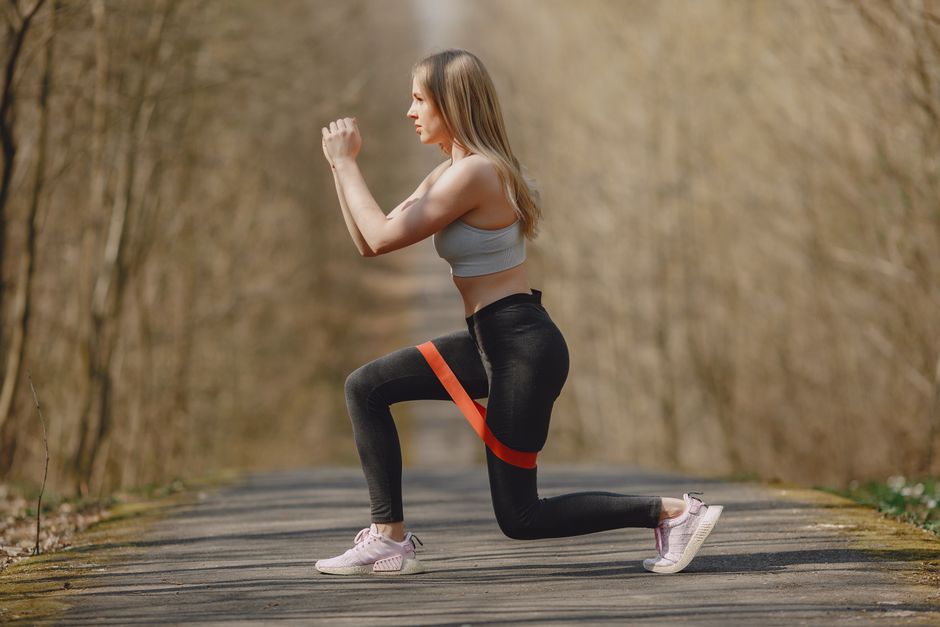
Squats are a foundational exercise that targets your legs and glutes. To perform a resistance band squat, place the band under your feet and hold the ends at shoulder height. As you lower into a squat, keep your chest up and push through your heels to return to standing. This exercise not only strengthens your lower body but also engages your core for stability.

2. Chest Press

The chest press is excellent for building upper body strength. Anchor the band behind you at chest level, hold the ends, and press forward until your arms are fully extended. Be sure to keep your elbows slightly bent and engage your core throughout the movement. This exercise helps improve posture and strengthens the chest and shoulders.

3. Seated Row

The seated row targets your back and biceps. Sit on the floor with your legs extended, wrap the band around your feet, and hold the ends. Pull the band towards your torso, squeezing your shoulder blades together. This movement promotes good posture and counteracts the effects of prolonged sitting.

4. Shoulder Press

For the shoulder press, stand on the band with feet shoulder-width apart, holding the ends at shoulder height. Press the band overhead until your arms are fully extended. This exercise builds shoulder strength and stability, essential for various daily activities and sports.

5. Glute Bridge

The glute bridge is a fantastic exercise for strengthening the glutes and hamstrings. Place the band around your thighs, just above your knees, and lie on your back with your knees bent. Push through your heels to lift your hips towards the ceiling while keeping your core engaged. Squeeze your glutes at the top of the movement for maximum effectiveness.

Beginner Tips

As you embark on your resistance band journey, consider these practical tips:

  • Start with a lighter band to master your form and technique. This approach will help you build a solid foundation and prevent injuries.
  • Focus on controlled movements rather than rushing through exercises. Take your time to perform each rep with precision, which will enhance muscle engagement and effectiveness.
  • Incorporate a full-body routine at least 2-3 times a week for balanced strength development. Consistency is vital for building strength and endurance.
  • Keep a workout journal to track your progress and adjust your routine as needed. Documenting your workouts helps you stay motivated and accountable.

Advanced Tips

Once you feel comfortable with the basics, try these advanced strategies:

  • Experiment with different band types (such as loop bands or tubes with handles) for variety. Different bands can provide unique challenges and stimulate muscle growth.
  • Incorporate supersets (performing two exercises back-to-back) to increase intensity. This method saves time and enhances your workout’s efficiency.
  • Focus on unilateral exercises (working one side at a time) to improve balance and coordination. This approach helps to identify and correct any strength imbalances between sides.

Frequently Asked Questions

  1. How do I choose the right resistance band? Start with a light band for beginners and progressively move to medium and heavy bands as your strength increases. Assess your performance regularly to ensure you’re using the correct resistance.
  2. Can I use resistance bands every day? Yes, but it’s important to allow your muscles time to recover. Incorporate rest days or alternate muscle groups. Listen to your body; if you’re feeling fatigued, take a break.
  3. Are resistance bands effective for weight loss? While they can help build muscle, a balanced diet and overall caloric deficit are essential for weight loss. Resistance training can improve your metabolism, aiding in fat loss.
  4. How do I prevent injury while using bands? Focus on maintaining proper form, warm up adequately, and listen to your body. If something feels wrong, stop immediately. It’s vital to prioritize safety over intensity.
  5. Can resistance bands replace weights? They can be a great alternative, especially for beginners, but incorporating both can provide a well-rounded fitness regimen. Weights and bands each offer unique benefits that can complement one another.

Incorporating resistance bands into your fitness routine is an excellent choice for beginners. They are accessible, versatile, and can effectively help you reach your fitness goals. By avoiding common mistakes and focusing on proper technique, you’ll be well on your way to building strength and improving your overall health.

Remember, consistency is key. Start slowly, track your progress, and gradually increase the challenge as you become more comfortable with the exercises. Enjoy the journey of getting stronger with resistance bands!

Eat daily, sleep daily, exercise daily.

    References

  1. Journal of Strength and Conditioning Research
  2. American College of Sports Medicine
  3. National Strength and Conditioning Association
  4. World Health Organization
  5. Centers for Disease Control and Prevention

LEAVE A REPLY

Please enter your comment!
Please enter your name here

four × 4 =

Popular Articles