Exercise Daily _ Soccer Speed Drills At Home Without Equipment
Many athletes believe that speed training requires expensive equipment or access to a gym, but this is a myth that limits potential. The truth is that you can significantly enhance your soccer speed through simple, equipment-free drills right in your living room or backyard. The misconception that speed development is solely reliant on fancy tools or facilities is not only outdated but also counterproductive. Let’s break down how you can elevate your game without breaking the bank.
Who This Is For
- Beginners wanting to enhance their foundational speed skills.
- Competitive athletes aiming to refine their speed without a gym.
- Busy adults seeking effective, time-efficient workouts.
- Parents looking for fun, engaging activities to do with their kids.
- Individuals recovering from injuries who need low-impact exercises.
Understanding Soccer Speed



As an Amazon Associate, Exercise Daily earns from qualifying purchases. This post may contain affiliate links. Last updated: October 23, 2026
Speed in soccer isn’t just about running fast; it’s about acceleration, agility, and the ability to change direction quickly. Soccer players need to sprint, decelerate, and pivot while maintaining ball control. Therefore, the drills you perform should mimic these movements to be effective. Speed is a multifaceted skill that involves not only the physical aspects but also the mental agility to anticipate plays and react accordingly. This combination of physical and mental speed is what makes a player truly effective on the field.
Moreover, understanding the biomechanics of running can provide insights into how to improve your speed. Proper running form—such as maintaining an upright posture, using your arms effectively, and landing on the balls of your feet—can significantly affect your speed and efficiency. Therefore, incorporating drills that emphasize form and technique is crucial in your training routine.
Explore more in our Exercise section.
What Most People Get Wrong
One of the biggest mistakes players make is focusing solely on straight-line speed. While sprinting in a straight line is important, soccer demands a combination of acceleration, deceleration, and lateral movement. Many drills that players engage in neglect these aspects, leading to a lack of improvement in game situations. This oversight can often result in players who may be fast in a straight line but struggle with the dynamic demands of an actual game, where quick changes of direction and speed are essential.
Additionally, some athletes underestimate the value of bodyweight exercises. They often believe that without weights or specialized equipment, they cannot achieve significant gains. However, bodyweight drills can effectively build strength and speed when executed properly. A study published in the Journal of Sports Science emphasizes that plyometric training, even without equipment, can improve speed and explosive power in athletes. This is particularly relevant for soccer players, who rely on explosive movements to outpace opponents and create scoring opportunities.
Effective Soccer Speed Drills at Home
1. High Knees
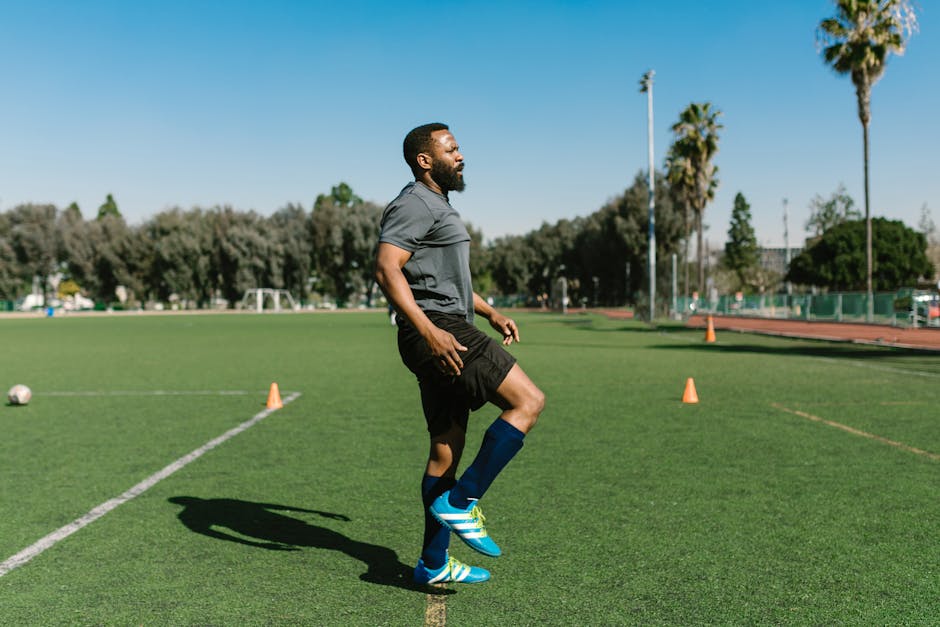
High knees are a fantastic way to improve your sprinting form and increase your heart rate. Stand in place and quickly lift your knees towards your chest, alternating legs as fast as possible. Aim for 30 seconds of intense effort followed by 30 seconds of rest. Repeat for 4-5 sets. This drill enhances your hip flexors and mimics the rapid leg movement required in soccer. Additionally, focus on driving your arms in coordination with your legs to simulate the running motion more effectively.
Explore more in our Fitness section.
2. Butt Kicks
Butt kicks are another excellent drill that targets your hamstrings and improves your running form. While jogging in place, kick your heels towards your glutes. Maintain a fast pace for 30 seconds, rest for 30 seconds, and repeat for 4-5 sets. This drill helps with the quick leg turnover needed when sprinting on the field. To increase the challenge, you can incorporate a slight backward lean to engage your core and maintain balance while executing the movement.
3. Lateral Shuffles
To enhance lateral movement, set up a small space in your home. Shuffle side to side for 30 seconds, focusing on quick foot movements and maintaining a low center of gravity. Rest for 30 seconds and repeat for 4-5 sets. Lateral shuffles train your body to change directions swiftly, which is crucial in soccer. To make it more dynamic, you can add a few quick steps forward and backward after each shuffle, simulating the movements you would perform during a match.
4. Plyometric Jumps
Plyometric exercises like squat jumps or tuck jumps can significantly improve your explosive power. Start in a squat position and jump as high as you can, landing softly back into the squat. Perform 10-15 reps, rest, and repeat for 3-4 sets. Research in the Journal of Strength and Conditioning Research indicates that plyometric training can enhance both speed and power in athletes. Ensure that you focus on the landing mechanics to absorb the impact correctly, which will help prevent injuries and promote better performance.
Explore more in our Nutrition section.
5. Agility Ladder Drills (Imaginary Ladder)
Even without a physical ladder, you can practice agility drills. Visualize a ladder on the ground and perform quick footwork patterns, such as in-and-out steps or lateral hops. Spend 30 seconds on each pattern, rest, and repeat. This drill improves foot speed and coordination, essential for quick movements on the field. You can also incorporate directional changes and sudden stops to simulate real-game scenarios where you need to react quickly to opponents or the ball’s movement.
Why This Actually Works
These drills work because they engage the fast-twitch muscle fibers, which are responsible for explosive movements and speed. By incorporating high-intensity intervals, you train your body to adapt to the demands of soccer, where quick bursts of speed are often required. According to a study published by the American College of Sports Medicine, high-intensity interval training effectively improves both aerobic and anaerobic fitness, making it an ideal training method for soccer players.
Moreover, performing these drills consistently at home allows for flexibility and convenience, which is essential for maintaining a regular training schedule. When players can integrate speed training into their daily routines, they are more likely to stick with it, leading to long-term improvements. Additionally, the absence of equipment encourages creativity in training, allowing players to adapt drills to their environment and personal preferences.
Creating a Speed Training Routine
To maximize your results, consider creating a structured speed training routine. Here’s a sample weekly plan:
- Day 1: High knees, butt kicks, lateral shuffles
- Day 2: Plyometric jumps, agility drills
- Day 3: Rest or light activity
- Day 4: High knees, lateral shuffles, butt kicks
- Day 5: Plyometric jumps, agility drills
- Day 6: Rest or light activity
- Day 7: Active recovery (walking, yoga)
Adjust the intensity and volume based on your fitness level, and be sure to include warm-ups and cool-downs to prevent injury. Consider incorporating dynamic stretches before your workouts to prepare your muscles and static stretches afterward to promote flexibility and recovery. This balanced approach will enhance your overall athletic performance and keep you injury-free.
Frequently Asked Questions
How often should I do speed drills?
For optimal results, aim to perform speed drills 2-3 times a week, allowing for adequate rest and recovery between sessions. This frequency allows your body to adapt to the training while also providing time to recover, which is essential for muscle repair and growth.
Can I combine these drills with my regular soccer training?
Absolutely! Integrating speed drills into your regular training can enhance your overall performance on the field. Just be mindful of your energy levels to avoid overtraining. Consider scheduling speed drills on days when you have lighter soccer practice sessions to ensure you have enough energy for both activities.
What if I have an injury?
If you’re recovering from an injury, consult a healthcare professional before starting any new exercise program. You can modify these drills to suit your capabilities and gradually increase intensity as you heal. It’s crucial to listen to your body and prioritize recovery to prevent re-injury, ensuring a safe return to full activity.
Conclusion
Incorporating soccer speed drills at home without equipment is not only possible but also highly effective. By challenging the myth that you need specialized tools to enhance your speed, you empower yourself to take control of your training. Consistent practice of these drills can lead to significant improvements in your performance on the field. So, lace up your shoes, find a little space, and start working on your speed today. Remember, the key to success is not just hard work but smart work. Eat daily, sleep daily, exercise daily. The journey to becoming a faster, more agile soccer player starts with the commitment to train effectively and consistently.
- Journal of Sports Science
- Journal of Strength and Conditioning Research
- American College of Sports Medicine
These are for informational purposes only. Consult your doctor and do your own research before use.