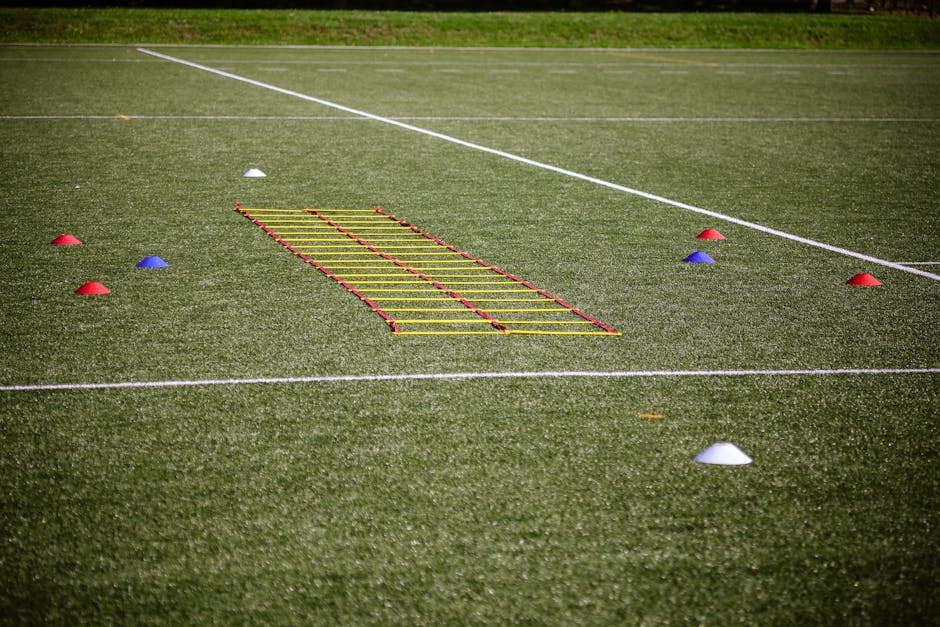
Exercise Daily _ Best Ladder Drills For Soccer Footwork
Many believe that simply running drills on the field is sufficient for improving soccer footwork. This is a dangerous myth. While field practice is essential, without incorporating targeted agility work, players risk stagnating in their development. Ladder drills are not just for show; they are a proven method to enhance footwork, agility, and overall performance on the soccer pitch. In this article, we will explore the best ladder drills specifically tailored for soccer footwork, debunk common misconceptions, and provide you with actionable insights to elevate your game.
Who This Is For
- Soccer players of all skill levels looking to enhance their footwork.
- Coaches seeking effective drills for training sessions.
- Parents of young athletes who want to improve their child’s agility.
- Busy adults who want to integrate quick agility workouts into their routine.
- Recovering athletes aiming to regain agility after an injury.
What Most People Get Wrong


As an Amazon Associate, Exercise Daily earns from qualifying purchases. This post may contain affiliate links. Last updated: October 23, 2026
One of the most significant errors in soccer training is the misconception that speed and strength alone dictate a player’s effectiveness. Many players overlook the importance of agility and footwork, often relegating these aspects to warm-up exercises. This is a critical mistake. Footwork is the foundation of a player’s ability to maneuver, evade opponents, and position themselves for optimal play. According to a study published in the Journal of Sports Science, athletes with superior footwork can significantly outperform their peers in both offense and defense.
Moreover, many athletes engage in ladder drills without understanding their purpose or execution. For example, performing a drill without proper form or speed can lead to minimal benefit and even injury. Ladder drills should be executed with intention, focusing on foot placement, speed, and body control. A lack of specificity in training leads to poor transferability to match situations, which is where the real game takes place. Understanding that these drills are not merely a physical activity but a cognitive one, where players must think about their movements and anticipate their next steps, is essential for maximizing their benefits.
Explore more in our Exercise section.
Why This Actually Works
Ladder drills are designed to improve foot speed, coordination, and agility. When executed correctly, they enhance muscle memory, allowing players to react quicker during gameplay. The drills promote neural adaptations, which means that the brain becomes more efficient at sending signals to the muscles, resulting in faster movements. A study in the International Journal of Sports Physiology and Performance highlights that agility training can lead to significant improvements in overall athletic performance.
Additionally, ladder drills can be tailored to mimic game scenarios, which increases their effectiveness. For instance, the movements required in a ladder drill can simulate the quick footwork needed to dodge an opponent or reposition oneself for a pass. This specificity is crucial because the more closely a training drill resembles game conditions, the better the transfer of skills to actual gameplay. Incorporating these drills into regular training sessions can lead to marked improvements in match performance, as players become more adept at making split-second decisions and executing complex movements under pressure.
Best Ladder Drills for Soccer Footwork
1. One Foot In Each Square
This drill focuses on foot speed and coordination. Start at one end of the ladder and place one foot in each square, alternating feet as you progress down the ladder. Aim for quick, light steps and maintain an upright posture. This drill develops the quickness needed for sudden changes in direction on the field. To increase the challenge, players can add arm movements, such as pumping their arms in sync with their legs, to engage the upper body and improve overall body coordination.
Explore more in our Fitness section.
2. Two Feet In Each Square
Similar to the previous drill, but this time both feet land in each square. This drill emphasizes stability and strength, crucial for maintaining balance during gameplay. Players should focus on keeping their knees slightly bent and their core engaged to maximize effectiveness. As players become more proficient, they can increase their speed or incorporate lateral movements, such as shuffling to the side after completing a set of squares, which further enhances their agility and responsiveness.
3. Lateral Shuffles
Stand to the side of the ladder and shuffle sideways, placing one foot in each square. This drill enhances lateral movement, which is vital for defending against opponents. Players should keep their hips low and maintain a quick pace to simulate match conditions. A useful progression for this drill is to add a ball, practicing dribbling while performing the lateral shuffle, which will help players learn to control the ball while moving side to side, a crucial skill in soccer.
4. In-and-Outs
Stand facing the ladder and step into the first square with one foot, followed by the other foot. Then step back out to the side, alternating feet. This drill improves agility and quickness, essential for making sharp turns and changes in direction during a match. To further enhance the drill, players can incorporate a quick acceleration after exiting the ladder, simulating the need to sprint after receiving a pass or when chasing down an opponent.
Explore more in our Nutrition section.
5. Icky Shuffle
This is a more complex drill that involves a three-step pattern: step into the first square with one foot, bring the other foot in, step out with the first foot, and repeat. This drill enhances coordination and foot speed, making it a favorite among soccer players. To increase difficulty, players can add a resistance band around their ankles to work on strength while performing the drill, thus improving their overall agility and power on the field.
Integrating Ladder Drills into Your Training
To maximize the benefits of ladder drills, players should incorporate them into their regular training regimen. Start with 2-3 sets of each drill, focusing on form and speed. As you become more comfortable, increase the number of repetitions and decrease rest time between sets. This progressive overload will help improve your agility over time. Moreover, players should aim to perform ladder drills in different environments, such as grass, turf, or even indoors, to adapt their footwork to various conditions they may encounter during matches.
Additionally, consider pairing ladder drills with other forms of training, such as strength training or endurance workouts, to create a well-rounded program. For example, following a ladder drill session with a short sprint workout can further enhance your speed and agility on the field. The combination of agility and strength training can be particularly effective, as evidenced by research from the Journal of Strength and Conditioning Research. Furthermore, integrating flexibility exercises and mobility work can ensure that players maintain a full range of motion, which is crucial for preventing injuries and optimizing performance.
Frequently Asked Questions
How often should I perform ladder drills?
For optimal results, incorporate ladder drills into your training 2-3 times per week. This frequency allows for improvement without leading to fatigue or overtraining. It’s essential to listen to your body and adjust the frequency based on how you feel, ensuring that you are not overexerting yourself while still challenging your agility and coordination.
Can ladder drills help with injury prevention?
Yes, ladder drills can enhance balance, coordination, and proprioception, which are crucial for preventing injuries. A study published in the British Journal of Sports Medicine emphasizes the role of agility training in reducing the risk of injuries among athletes. By improving these foundational skills, players are better equipped to handle the physical demands of the game, reducing the likelihood of sprains, strains, and other common injuries.
Are ladder drills suitable for beginners?
Absolutely! Ladder drills can be modified to suit all skill levels. Beginners can start slowly and focus on form before increasing speed and complexity. As they become more comfortable with the movements, they can gradually introduce more advanced techniques and variations, ensuring a progressive learning experience that builds confidence and competence on the field.
Conclusion
Incorporating ladder drills into your soccer training can significantly enhance your footwork, agility, and overall performance. By challenging the outdated belief that speed and strength alone are sufficient, you can develop a more well-rounded skill set that will serve you on the field. Remember, effective training is not just about hard work; it’s about smart work. So, lace up your cleats and get ready to take your game to the next level with these essential ladder drills. Consistent practice and dedication will not only improve your skills but also give you a competitive edge in every match.
- References
- Journal of Sports Science
- International Journal of Sports Physiology and Performance
- Journal of Strength and Conditioning Research
- British Journal of Sports Medicine
Eat daily, sleep daily, exercise daily.
These are for informational purposes only. Consult your doctor and do your own research before use.