Exercise Daily _ Soccer Agility Drills For Beginners
Many believe that agility in soccer is solely about speed and physical fitness, but this notion is misleading. The truth is, agility encompasses a complex interplay of balance, coordination, and cognitive response time. Beginners often jump straight into high-speed drills, neglecting the essential foundational skills that truly enhance their agility on the field. If you’re a beginner looking to improve your soccer agility, understanding the right drills and their underlying principles is crucial for your development.
Who This Is For
- Beginners who want to develop essential soccer skills.
- Athletes transitioning from other sports into soccer.
- Busy adults looking for efficient training methods.
- Parents seeking fun ways to engage their children in physical activity.
- Individuals who are overweight and want to improve their fitness through soccer.
- Recovering athletes who need to rebuild agility and coordination.
Understanding Agility in Soccer



As an Amazon Associate, Exercise Daily earns from qualifying purchases. This post may contain affiliate links. Last updated: October 23, 2026
Agility in soccer is not just about how fast you can run; it involves how well you can change direction, maintain balance, and react to the dynamic nature of the game. According to the National Institutes of Health, agility is a critical component of athletic performance, particularly in sports requiring quick changes in direction, such as soccer. This section will explore the fundamental components of agility and how they apply to soccer.
Key Components of Agility
- Balance: The ability to maintain stability when moving and changing directions. In soccer, this is crucial when dribbling the ball or making quick turns to evade opponents.
- Coordination: The harmonious functioning of different body parts to execute movements smoothly. Good coordination allows players to control the ball effectively while moving at speed.
- Reaction Time: The speed at which one can respond to stimuli, crucial for anticipating opponents’ moves. Quick reaction time can mean the difference between intercepting a pass and being left behind.
What Most People Get Wrong
One of the most common mistakes beginners make is focusing too much on speed while neglecting the foundational aspects of agility. Many novice players believe that sprinting drills alone will enhance their performance. However, without proper balance and coordination, speed becomes ineffective. Research indicates that agility training should incorporate multi-directional movements and cognitive challenges to be truly effective (Frontiers in Sports).
Another misconception is that agility drills are only for advanced players. In reality, everyone, especially beginners, can benefit from agility training. Integrating simple drills into your routine can significantly impact your overall game performance. Agility training is about learning how to move efficiently and effectively in a game-like context, which is beneficial for all skill levels.
Essential Soccer Agility Drills for Beginners
Now that we’ve debunked some myths, let’s dive into specific drills that can help beginners improve their agility on the soccer field. Each drill focuses on different aspects of agility, ensuring a well-rounded approach to training. These drills are designed to be simple yet effective, requiring minimal equipment while maximizing the benefits to your agility.
1. Ladder Drills
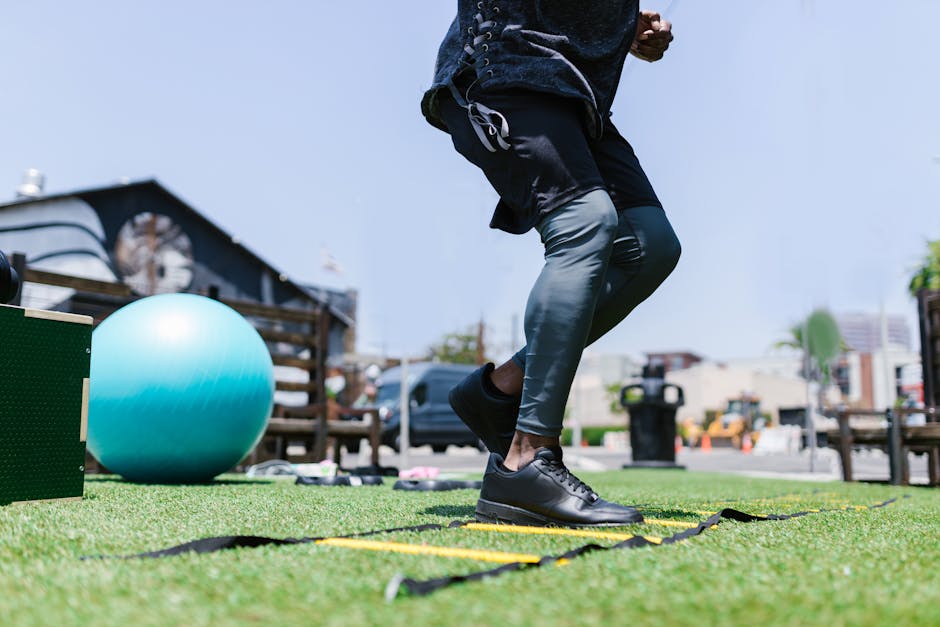
Ladder drills are excellent for developing foot speed, coordination, and agility. They help improve your ability to change direction quickly while maintaining control. The agility ladder is a versatile tool that can enhance various aspects of your soccer performance.
- Basic Ladder Drill: Place a ladder flat on the ground. Step into each square with both feet, moving sideways. Focus on quick foot movements, and try to minimize the time your feet are on the ground. This drill helps in building speed and coordination.
- In-Out Drill: Stand beside the ladder. Step into the first square with your right foot, then your left, and step out again. Repeat this pattern as you move down the ladder. This drill emphasizes quick foot placement and can be modified by increasing the speed or adding a ball to increase the difficulty.
2. Cone Drills
Using cones can help simulate game scenarios where you need to change direction rapidly. These drills enhance your spatial awareness and decision-making skills, which are essential during a match. Setting up cones allows you to create various patterns to challenge your agility.
- 5-10-5 Drill: Set up three cones in a straight line, 5 yards apart. Start at the middle cone, sprint to one end cone, touch it, then sprint to the other end cone, and return to the center. Repeat several times, focusing on explosive starts and stops. This drill is great for improving lateral movement and acceleration.
- Zigzag Drill: Arrange cones in a zigzag pattern. Sprint from cone to cone, focusing on quick directional changes. As you become more comfortable, increase your speed and try to minimize your cutting angle to enhance your agility further.
3. Shuttle Runs
Shuttle runs are an excellent way to build endurance while enhancing agility. They mimic the back-and-forth movements often required in soccer. This drill is particularly beneficial for improving your cardiovascular fitness along with agility.
- Mark two points 10-20 yards apart. Start at one point and sprint to the other, touching the ground before returning. Repeat for a set duration, aiming to increase your speed with each set. Incorporating variations such as side shuffles or backpedaling can also enhance agility and overall fitness.
4. Ball Control Drills
Agility isn’t just about movement; it’s also about controlling the ball while moving. Incorporating ball control into your agility drills can enhance your overall effectiveness on the field, as good ball control is essential for successful dribbling and passing under pressure.
- Dribble and Weave: Set up cones in a straight line. Dribble the ball through the cones, focusing on quick foot movements and tight turns. This drill improves your ability to maneuver the ball while changing direction, which is critical during matches.
- Obstacle Course: Combine various agility drills and ball control tasks into an obstacle course. This will challenge your agility while keeping the ball under control. You can include tasks like dribbling around cones, performing ladder drills, and completing shuttle runs, making it a comprehensive workout.
Why This Actually Works
The drills outlined above are effective because they target the essential components of agility: balance, coordination, and reaction time. By systematically practicing these elements, beginners can develop a solid foundation that translates into improved performance on the field. A study published in the Journal of Sports Sciences emphasizes that agility training enhances not only physical capabilities but also cognitive functions, such as decision-making under pressure.
Moreover, incorporating agility drills into your routine fosters muscle memory, allowing for quicker and more efficient movements during a game. This is particularly beneficial for beginners who are still learning how to navigate the complexities of soccer. As you practice these drills, you will develop the ability to make split-second decisions, an invaluable skill in competitive play.
Additionally, agility drills can help prevent injuries by strengthening the muscles and joints used during sudden movements. This is crucial for beginners, as they may not yet have the muscular endurance or strength to withstand the physical demands of the sport.
Frequently Asked Questions
1. How often should I practice agility drills?
For beginners, practicing agility drills 2-3 times a week is ideal. This frequency allows for skill development without overwhelming your body. Consistency is key; gradually increase the intensity and complexity of the drills as you become more comfortable.
2. Can I do these drills without a partner?
Yes, most agility drills can be performed solo. You can set up cones or ladders and practice at your own pace. However, practicing with a partner can introduce competitive elements, which can further enhance your agility and decision-making skills.
3. What equipment do I need for these drills?
Basic equipment includes cones, ladders, and a soccer ball. These items are affordable and can enhance your training significantly. You can even create makeshift cones using objects around your home if necessary. The key is to have clear markers for your drills.
4. How can I track my progress?
Tracking your progress can be done by timing your runs during shuttle drills or counting the number of successful repetitions in ladder drills. Keeping a training journal can also help you set goals and monitor improvements over time, providing motivation to continue your agility training.
Conclusion
Improving your agility as a beginner in soccer requires a combination of the right mindset, foundational skills, and targeted drills. By debunking myths and focusing on essential agility components, you can elevate your game and become a more versatile player. Remember to incorporate these drills into your training routine regularly, and watch as your agility transforms your performance on the field. Explore more exercise tips to complement your agility training.
- National Institutes of Health – Agility in Sports
- Frontiers in Sports – Agility Training
- Journal of Sports Sciences – The Importance of Agility
- PubMed – Effects of Agility Training
Eat daily, sleep daily, exercise daily.
These are for informational purposes only. Consult your doctor and do your own research before use.