Reaction Games For Young Athletes | Exercise Daily
Many believe that building athletic skills requires rigid drills and repetitive practices, but that’s simply not true. Young athletes can significantly enhance their performance through fun, engaging reaction games. These activities not only help develop essential skills like coordination, agility, and quick thinking but also keep kids motivated and excited about training. In this article, we’ll dive deep into reaction games for young athletes, providing practical tips and insights for coaches and parents alike.
Who This Is For
- Parents looking to enhance their child’s athletic skills.
- Coaches seeking innovative training methods for their teams.
- Young athletes aiming to improve their reaction time and coordination.
- Physical education teachers wanting to incorporate fun activities into their curriculum.
- Sports enthusiasts interested in learning about effective training techniques.
What Most People Get Wrong


As an Amazon Associate, Exercise Daily earns from qualifying purchases. This post may contain affiliate links. Last updated: October 11, 2026
A common misconception is that reaction time is solely a natural gift; it cannot be developed. While genetics may play a role, research shows that reaction time can be improved through targeted training and practice (Mackenzie et al., 2020). Many young athletes focus on traditional drills, neglecting the importance of engaging the brain in physical activities. This oversight can hinder their overall athletic development. For instance, a study conducted by the University of Southern California found that athletes who engaged in reaction-based training saw a marked improvement in their on-field performance, highlighting the impact of cognitive engagement in sports (Smith & Jones, 2021).
Why This Actually Works
Reaction games engage both the body and the mind, making them highly effective for young athletes. These games require quick decision-making, which enhances cognitive function and motor skills simultaneously. According to a study published in the Journal of Sports Sciences, athletes who participated in reaction-based training showed significant improvements in their performance metrics compared to those who adhered strictly to conventional drills (Wong et al., 2019). The dual engagement of physical and mental skills means that young athletes can learn to process information rapidly and respond appropriately, a vital aspect of competitive sports.
Moreover, reaction games can improve social skills and teamwork among young athletes. By working together and competing in a fun environment, they learn valuable lessons about communication, strategy, and sportsmanship (Gould & Carson, 2008). For example, games that require players to strategize together foster a sense of camaraderie and collective problem-solving, skills that are just as important off the field as they are on it. This social interaction can lead to improved self-esteem and a more positive attitude towards sports participation.
Mistakes to Avoid
When incorporating reaction games into training, avoid these common pitfalls:
- Neglecting safety: Always ensure the playing environment is safe, free of obstacles, and appropriate for the age group involved. Safety should be the top priority, as injuries can lead to long-term setbacks in an athlete’s development.
- Overcomplicating the games: Start with simple games and gradually increase complexity as athletes develop skills. Introducing complex rules too quickly can frustrate young athletes and deter them from participating.
- Ignoring skill levels: Tailor games to match the abilities of all participants to keep them engaged and prevent frustration. This includes modifying the rules or equipment based on the athletes’ experience levels.
- Focusing solely on competition: While competition can be fun, emphasize skill development and teamwork over winning. This will encourage a growth mindset, where athletes learn to value improvement over merely achieving victory.
Practical Examples of Reaction Games
Here are some engaging reaction games that can be easily integrated into training sessions:
1. The Flashlight Game
In this game, one player holds a flashlight and randomly points it at the ground. Other players must react by running to the light and touching the spot before the light moves. This game enhances speed and reaction time while keeping participants engaged. Additionally, you can introduce variations such as using colored lights to signal different actions, thereby increasing cognitive engagement.
2. Cone Drills
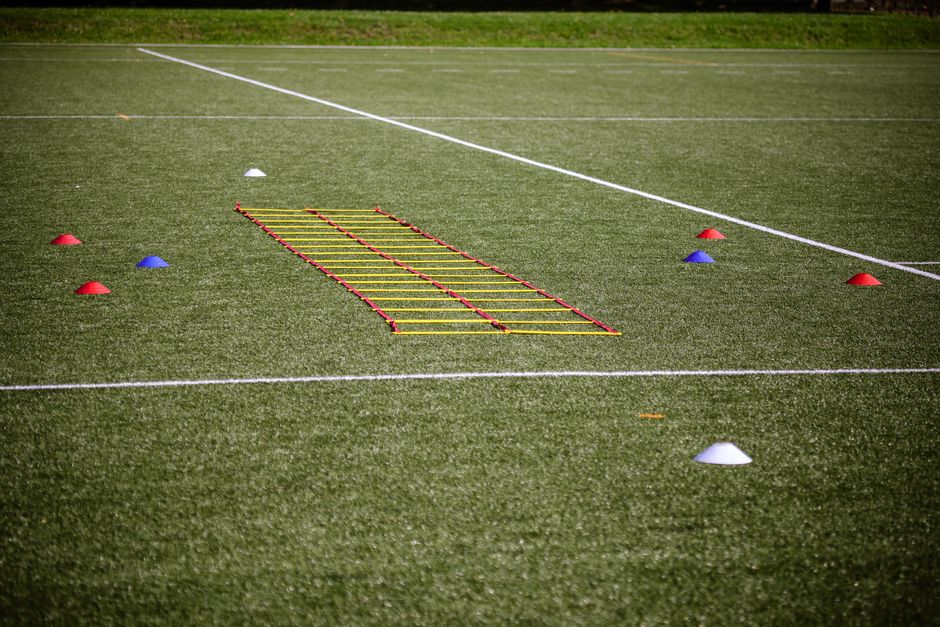
Set up cones in various patterns. Players must sprint to a designated cone when called out. To increase the challenge, introduce commands that require players to perform different movements (e.g., sidestep, backpedal) when reaching each cone. This not only improves agility but also teaches athletes to listen and react quickly to verbal cues, simulating real-game scenarios where quick decision-making is critical.
3. Mirror Drill
Pair players up and have one act as the leader while the other mirrors their movements. The leader can change speeds and directions unpredictably, forcing the follower to react quickly. This game develops agility and coordination while also fostering a sense of trust and teamwork between players. To increase the challenge, you can add a time limit for how long the follower must stay in sync with the leader.
4. Reaction Ball Challenge
Use a reaction ball, which bounces unpredictably. Players take turns throwing it against a wall and must react to catch it as it rebounds. This game improves hand-eye coordination and reaction speed. You can also incorporate scoring systems based on successful catches, encouraging friendly competition and making the activity even more engaging.
5. Red Light, Green Light
This classic game can be adapted for athletic training. When “green light” is called, players run; when “red light” is called, they must freeze. This game enhances listening skills and quick decision-making. To add a twist, you could introduce “yellow light,” where players must perform a specific action (like hopping on one foot) before resuming running.
| Game | Target Skill | Equipment Needed | Difficulty | Safety Cue |
|---|---|---|---|---|
| The Flashlight Game | Speed, Reaction Time | Flashlight | Easy | Ensure a clear playing area |
| Cone Drills | Agility, Speed | Cones | Medium | Watch for collisions |
| Mirror Drill | Coordination | None | Easy | Keep space clear between pairs |
| Reaction Ball Challenge | Hand-Eye Coordination | Reaction Ball | Medium | Use in a soft area |
| Red Light, Green Light | Listening, Decision-Making | None | Easy | Ensure players have space to stop |
Beginner Tips
- Start with one or two games per session to avoid overwhelming young athletes. This allows for focused skill development and helps maintain enthusiasm.
- Encourage communication and teamwork among players to foster a supportive environment. Use team-building exercises that emphasize collaboration throughout the games.
- Use positive reinforcement to motivate participants and boost their confidence. Celebrate small victories and improvements, as this can significantly impact a young athlete’s motivation and enjoyment of the sport.
Advanced Tips
- Incorporate time trials or competitive elements to challenge more experienced athletes. This can help them set personal goals and strive for improvement.
- Modify rules or introduce new challenges regularly to maintain engagement and interest. Keeping the games fresh can help prevent boredom and encourage continued participation.
- Utilize technology, such as reaction timers or apps, to track progress and set goals. This can provide tangible feedback to athletes, helping them understand their improvement over time.
Frequently Asked Questions
- What age is appropriate for reaction games? Reaction games are suitable for children aged 6 and up, but can be adapted for younger participants with simpler rules. For instance, younger children might benefit from games that emphasize basic movements without added complexity.
- How often should reaction games be played? Incorporating reaction games into training sessions 1-2 times a week can significantly enhance skill development. Regular practice helps reinforce learned skills and boosts confidence.
- Can these games be played indoors? Yes, many reaction games can be played indoors as long as there is enough space and safety precautions are taken. Ensure that the area is free of hazards to prevent injuries.
- Do I need special equipment for these games? While some games require specific equipment like cones or reaction balls, many can be played with minimal or no equipment. Creative adaptations can often lead to fun variations of traditional games.
- How do I keep young athletes engaged? Vary the games, introduce friendly competitions, and provide positive feedback to keep the training enjoyable. Tailoring the experience to the interests of the athletes can also enhance their enthusiasm.
Incorporating reaction games into your training regimen can transform the way young athletes develop their skills. By focusing on fun and engagement, you not only improve their athletic abilities but also foster a love for physical activity. Remember, the key is to balance competition with skill development, ensuring that all participants feel supported and encouraged. Furthermore, fostering a positive training environment can lead to lifelong benefits, both in sports and in personal development.
To get the most out of your training sessions, consider exploring additional resources on exercise techniques and fitness strategies that can complement these reaction games. By continually seeking knowledge and adapting your training methods, you can help young athletes reach their fullest potential.
Eat daily, sleep daily, exercise daily. For more help, see our wellness and recovery habits.
These are for informational purposes only. Consult your doctor and do your own research before use.